
Park Perspective: Redefining Leadership — From structure to self-discovery
A new chapter in leadership
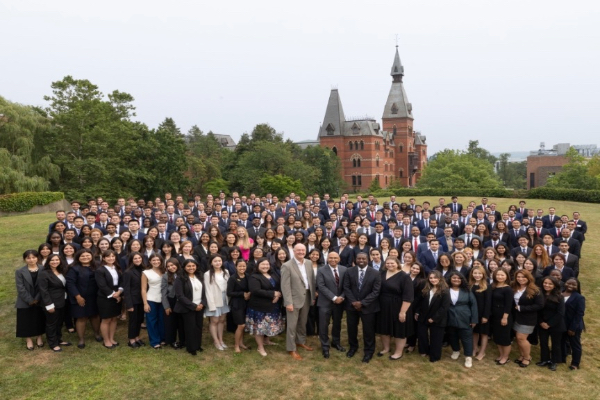
When I left the military and began my MBA journey at the Samuel Curtis Johnson Graduate School of Management at Cornell University, I had a good grasp on leadership. My years in uniform had taught me how to take responsibility, make decisions under pressure, and prioritize the people I led. My brief time at Johnson quickly taught me that the true essence of leadership is far less about position or authority and much more about awareness, empathy and creating a psychologically safe space for all team members to contribute effectively.
Structure as a starting point
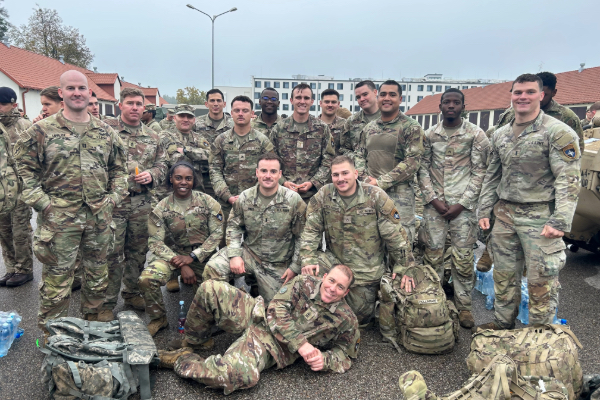
In the U.S. Army, leadership is defined by a clear and structured chain of command. The chain of command outlined the mission, purpose and desired outcomes that guided every decision. My job as a logistics officer was to ensure that all mission-essential supplies and equipment got where they needed to be when they needed to be there. In this process, I relied on discipline, planning and execution. Those lessons are invaluable; however, what I didn’t realize until coming to Johnson was how much of my leadership lens had been shaped by structure. The military taught me how to lead when the rules are clear; business school has taught me to lead when they are not.
Learning through collaboration
From my very first day in Sage Hall, I realized that Johnson is designed to challenge how every individual views leadership. The core teams are intentionally formed groups of people with different strengths and backgrounds, all working together toward a common goal. This aspect mirrors the military, but the difference lies in the fact that there is no formal hierarchy. Our success depended on how well we combined these strengths, established a collaborative environment and aligned our efforts toward the task at hand.
What mattered most wasn’t directing the process but helping to shape an environment where ideas could thrive. By focusing on clarity, active listening and alignment rather than structure, our team found its stride. The deeper we leaned into open dialogue and shared ownership, the stronger our outcomes became. The results we achieved reinforced one of the most valuable lessons of my time at Johnson: Leadership is about creating the conditions where everyone’s voice is heard and valued.
This lesson has carried far beyond the core teams. In the classroom, group discussions often resemble real-world boardrooms filled with diverse perspectives, tight timelines and complex problems. I have observed that the leaders who perform best in these situations are not the ones who attempt to take control or be the first to answer, but those who listen deeply, bring together different ideas and move the group toward a shared understanding. Learning how to accomplish this has been one of the most rewarding aspects of my MBA experience.
The Park Fellowship: Growth through reflection
One of the most meaningful opportunities to put this into practice came through the Roy H. Park Leadership Fellowship. The program encourages us to think differently about leadership not as a fixed set of traits, but as an evolving practice grounded in purpose. Our cohort conversations have been honest and challenging, often centered on self-reflection rather than external achievement. These discussions create space for members to be open, thoughtful and introspective, which ultimately drives genuine personal growth.
A particularly impactful moment came during a Park Fellowship workshop focused on personal values. We reflected on times our leadership was tested and what guided our decisions in those moments. That exercise reminded me that leadership is not defined by titles or results; it is shaped by how we show up for others when no one is watching. The process helped me articulate my own leadership credo: to lead through clarity, empathy and service to others. Those principles now guide how I approach both teamwork and life outside of Johnson.
The power of community
Throughout my first semester, I have been continually reminded of the importance of relying on those around me. Leadership is not a solo pursuit. Strength lies in numbers, and it is vital to build lasting relationships with the people around you to get the support you need. Whether during recruiting season, case competitions or group projects, I have seen the impact of investing in one another’s success. Effective leadership relies on establishing a sense of community where collaboration and support shine through even in the most difficult times.
That spirit of shared growth makes Johnson a special place. This collaborative culture enables people to take risks, make mistakes and learn openly to become the best versions of themselves. This environment has taught me the importance of psychological safety: the idea that people perform their best when they feel respected and trusted. I aspire to build that kind of culture wherever I lead.
Continuing the journey of personal development
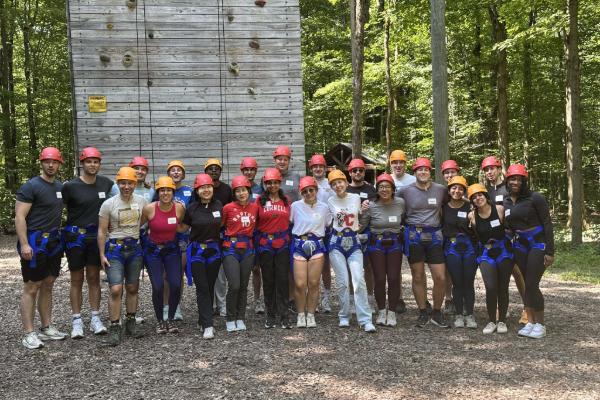
I often reflect on how much my definition of leadership has evolved in my first four months at Johnson. The Army taught me how to lead with precision and discipline, while Johnson has taught me how to lead with empathy and adaptability. I have learned that leadership is not static; it grows with experience and reflection. Some days it means setting direction, while other days it means stepping back so others can step forward.
As I continue through this journey, I am grateful for the people and experiences that have helped me expand my understanding of what it means to lead. I am leaving my first semester realizing that leadership is not just about the skills or traits you possess; it is about the mindset you bring to the table. It is about creating clarity in uncertainty, helping others find their voice and building trust in the process to empower others to reach their full potential.
Leadership is not about being in charge or taking control of a situation. It is about being accountable to your values, your team and your purpose. Johnson has helped me redefine that purpose, and I look forward to continuing to grow as a leader through each stage of this process.
About the author

Brandon Jones is a first-year MBA student in the Samuel Curtis Johnson Graduate School of Management and a Roy H. Park Leadership Fellow, pursuing a career pivot into consulting. Originally from the suburbs of Philadelphia, he graduated from Gettysburg College with a degree in economics. Before business school, he was a U.S. Army logistics officer in the 3rd Infantry Division. At Johnson, he is the vice president of alumni for the Association of Veterans and an active member of the Johnson Consulting Club and the Park Fellows community.