
Pressed for legacy: Cider mill keeps a tradition going strong
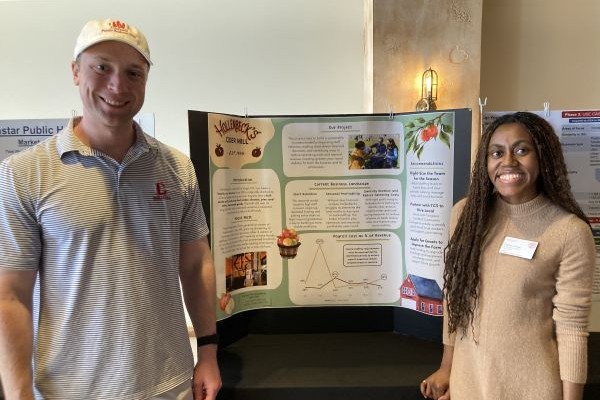
Chelsey Turner and Evan Gold at the Big Red Microenterprise Community Engagement Showcase. Photo credit: Chelsey Turner and Evan Gold.
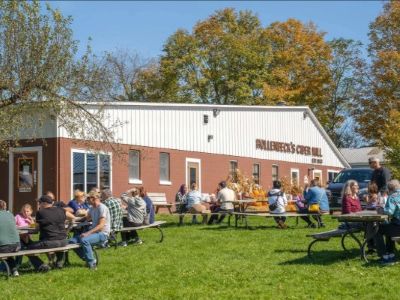
Hollenbeck’s Cider Mill in Virgil, New York, is more than just cider and donuts in the fall; it’s a tradition. Since 1933, the Hollenbeck family has built a seasonal haven that draws families back year after year with the scent of warm pies, an 1874 cider press and a deep sense of community.
But behind the counter and the nostalgia is a small business working hard to stay vibrant in a changing world. Through the Big Red Microenterprise (BRM) program at Cornell’s Samuel Curtis Johnson Graduate School of Management, we partnered with Matt Hollenbeck, the mill’s third-generation owner, to help ensure this legacy business continues to thrive for generations to come.
A family story still being written
Hollenbeck, the grandson of the original founders, didn’t take the reins right away. After working as a geologist, he returned home in 2017 seeking a life more connected to the land, his family and the community members who drop in each fall with stories that begin, “I came here as a kid.”
Working with Hollenbeck, we saw the care and intention behind every decision — from experimenting with new products to developing financial systems. His vision balances tradition with sustainability.
Winter pies and year-round cravings
One of our favorite details: Even in February, long after the cider press has gone quiet, customers still knock on the door asking for pies. That kind of loyalty shows it’s not just about the product; it’s about how the business makes people feel.
Still, seasonality poses challenges: staffing turnover, unpredictable profits and tight margins. When Hollenbeck asked for help finding ways to bring more stability to the business, we focused on solutions that were both practical and true to the business’ values.
Blending tradition with strategy
We concentrated on three priorities:
- Keeping great people: High staff turnover every year meant constant retraining. We offered recommendations for right-size staffing during peak periods and explored partnerships to develop a more consistent local hiring pipeline.
- Understanding the numbers: As in many small businesses, financial planning often took a back seat to the daily demands of operations. We helped Hollenbeck develop simple, effective tools to track monthly performance and identify which parts of the year were most profitable.
- Planning for the future: We explored agricultural grants that could support mill updates and reduce long-term energy costs — giving Hollenbeck room to think beyond one season at a time.
What it means to lead with care
Running a business is tough. The hours are long; the responsibilities are endless; and the challenges are unrelenting. But in return, you get the satisfaction of building something that matters to your community. Hollenbeck understands that. He knows this business inside and out, from the intricacies of the cider press to the preferences of longtime customers.
He has modernized the mill where it counts, introducing new products, improving systems and exploring ways to keep the operation sustainable for years to come. But what stood out most was his care for the people. He is just as passionate about the team who shows up every season as he is about the cider and pies. That combination of humility, dedication and vision makes Hollenbeck’s special — and made this project rewarding for us.
Rooted in community, built for the future
As MBA students, we’re often encouraged to think about scale, growth and disruption. But our time at Hollenbeck’s reminded us that not all value is measured in percentages or projections. Some businesses matter because they’re woven into the fabric of a place. They matter because of the people behind them and the communities they serve.
Our BRM project helped make a family business a little stronger. More than that, it gave us the chance to be part of a story that’s still unfolding — a story about legacy, learning and the joy of a warm apple-cheddar pie on a cold winter day.
About the authors

Chelsey Turner, MBA ’26 of Mississippi is a student at the Johnson School, concentrating on strategy and sustainability. A proud graduate of a historically Black university in Mississippi, she previously worked at the NAACP, leading cross-functional teams and managing large-scale projects focused on equity and impact. Turner is passionate about helping organizations craft strategies that drive both business success and social responsibility. She believes companies can thrive financially while advancing environmental and community goals. With a strong foundation in advocacy and leadership, she is committed to using her skills to build a more sustainable and equitable future.

Evan Gold, MBA ’26 is a student at the Johnson School, originally from Atlanta. He studied finance at Emory University and began his career in corporate finance at Comcast NBCUniversal, working at Universal Studios Orlando and the company’s Philadelphia headquarters. He is preparing to take on a leadership role in his father’s company post-MBA by rounding out his business acumen at Johnson. Passionate about helping family enterprises thrive, he is president of the Family Business Club and is committed to supporting the next generation of family business leaders.