
Cornell on Emerging Markets
Cornell’s Emerging Markets Institute at the Samuel Curtis Johnson Graduate School of Management provides thought leadership on the role of emerging markets—and emerging market multinationals—in the global economy.
Bridging Finance and Infrastructure
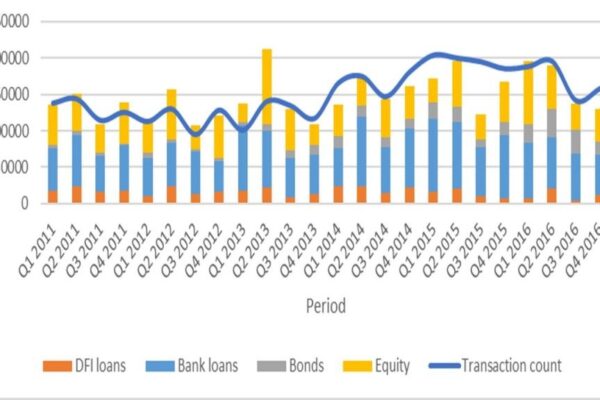
Issue NO. 21 By Otaviano Canuto and Aleksandra Liaplina* The world economy – and emerging market and developing economies in particular – display a gap between infrastructure needs and its finance. On the one hand, infrastructure investment has fallen far short of what would be necessary to support potential growth. On the other hand, […]
The role of the private sector in consolidating peace in Colombia
ISSUE NO. 20 by Juana García and Juan David Martínez, Universidad de los Andes The implementation of the Havana Agreement, between the Colombian government and the FARC guerrillas in 2016, opens a new possibility for peacebuilding and consolidation in the country. The perceived benefits in the economy and Colombian society with the implementation of […]
Emerging Heavyweights: The Surge of the E20
At the Emerging Markets Institute at Cornell University, we identify 20 Emerging Markets, which we call E20, which we consider the new “heavyweights” of the world economy—those economies that have and are expected to have an increasing influence in the rest of the world for the years to come. The characteristic used to define […]
Motivations for the Internationalization of Brazilian firms
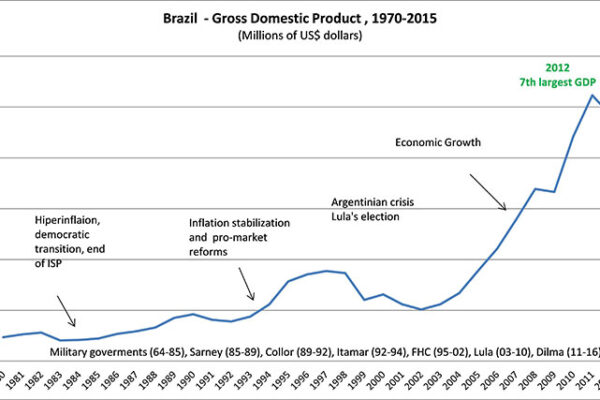
ISSUE NO. 18 by Fernanda Ribeiro Cahen* and Moacir de Miranda Oliveira Jr.** Brazil was one of the world’s fastest-growing economies from 2000 to 2010, but the boom has appeared to slow down since 2011, during which it hosted two of the world’s largest sporting events, including the World Cup in 2014 and the […]
The Belt and Road Initiative: Connecting the Chinese Dream with the World Dream
ISSUE NO. 17 by Jayne Jin, MBA ’13 The 1st Belt and Road Forum for International Cooperation (BRF) was held in Beijing, China on 14-15 May 2017, with 29 heads of state, three heads of international institutions, and approximately 1,500 guests from over 130 countries attending the event. The main goal of the BRF […]
Unfolding Energy Efficiency in Eastern Partnership Countries
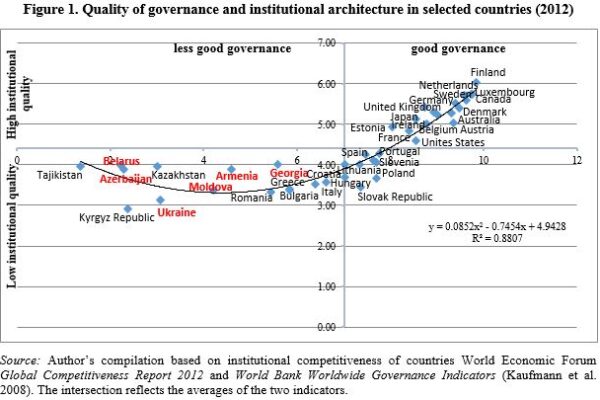
ISSUE NO. 16 by Oliver Kovacs, Ph.D.* Fostering energy efficiency is a prerequisite of sustainable development. A recently published Synthesis Report examines the innovation ecosystem in member countries of the Eastern Partnership Countries of the European Union and its role in promoting energy efficiency. A more systemic understanding is to stimulate the necessary paradigm […]
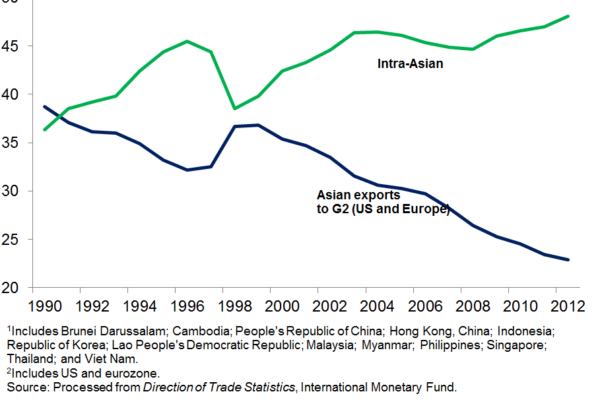
Regional Integration Amid Growing Protectionism
ISSUE NO. 15 by Iwan J. Azis* Over the last 30 years or so, openness and technological progress have fostered economic integration around the world. Regional integration, defined as cross-border flows among neighboring countries, has also become more intense in some areas. But recent development puts the trend in question. Income inequality is growing, […]
The Brazilian Productivity Anemia
ISSUE NO. 14 by Otaviano Canuto Brazil has been suffering from “anemic productivity growth”. This is a major challenge because in the long run, sustained productivity increases are necessary to underpin inclusive economic growth. Without them, increases in real labor earnings tend to conflict with global competitiveness; collecting taxes in order to fund government […]
The Impact of Political Capital on Firm Internationalization: Evidence from Russian FDI and Exports
Issue No. 13 by Lilac Nachum*, Andrei Yu. Panibratov** and Rajeev J. Sawant*** Is a firm’s political capital in the home country of value internationally? As a form of firm-specific capital that originates in firms’ relationships with home country politicians, the value of this asset outside the home country is dubious, calling to question […]