
Why fintechs are winning in Nigeria while telcos dominate elsewhere
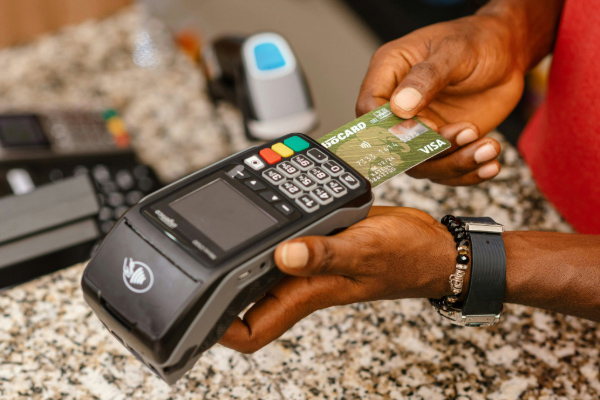
Photo credit: Ali Mkumbwa, Unsplash
In 2018, when the Ghana subsidiary of the South African telecommunications company MTN went public on its local stock exchange, it took a novel approach: allowing retail investors to buy shares using its mobile money platform, MoMo. Over 85% of investors in the $237 million initial public offering (IPO) used MoMo to participate, marking the world’s first mobile money-driven public offering. The offering underscored the growing power of telecom-led mobile payments in Africa and echoed the success of the mobile money transfer service M-Pesa in Kenya.
Since then, MTN has tried replicating this model in other African countries. It has succeeded in places like Rwanda and Uganda but has stumbled in Nigeria, its biggest market by revenue. Despite having more subscribers in Nigeria than the populations of Rwanda and Uganda combined, MTN’s mobile money platform hasn’t scaled the same way.
The reasons are less about consumer demand or product quality and more about regulation and market structure. In Nigeria, telcos face tougher competition and operate under rules that promote platform neutrality. Meanwhile, fintechs have surged.
Why telco-led mobile money has struggled in Nigeria
Six years after MTN launched its financial services push in Nigeria, adoption remains sluggish. Despite strong brand equity and a large agent network, revenue from mobile money remains modest. Airtel, another major telco headquartered in India, reported only $5 million in mobile payments revenue from Nigeria in its latest report for the fiscal year ended March 2025, compared to $1 billion revenue from its combined fintech operations in East and Francophone Africa.
One reason often cited is timing. While MTN and Airtel only received full licenses between 2019 and 2022, fintechs quickly captured market share during the same period. Startups such as Moniepoint, PalmPay, and Chinese venture capital-backed fintech OPay are taking advantage of fintechs’ narrower licenses to blitzscale — or employ aggressive tactics to scale rapidly — in Nigeria; with their large customer bases, their revenues are growing at high cumulative annual rates, according to a report in the Financial Times. OPay offered cash back and subsidized transactions to acquire users. Moniepoint focused on point-of-sale terminals and served informal merchants with instant settlement tools.
These upstarts have succeeded not simply because the telcos have stumbled. They’re thriving thanks to their refined business models that directly address Nigeria’s fragmented financial landscape while pouring resources into product innovation and customer acquisition as market competition intensifies. This market rivalry and regulatory neutrality for industry participants is much different from Kenya, home of the original model for payments innovation on the continent.
M-Pesa’s Kenya advantage: Early start, weak competition
In Kenya, telecom company Safaricom pioneered mobile money when it launched M-Pesa in 2007. The Central Bank of Kenya allowed it to function without banking regulatory burdens, enabling rapid expansion in the country. With no nationwide real-time payment system at the time, Safaricom built one leveraging its widely used broadband network and large subscriber base.
Crucially, M-Pesa operated for years without being required to interoperate with other digital payments platforms, creating a closed ecosystem that entrenched its dominance. It became Kenya’s default payments infrastructure, used for everything from everyday commerce in the local markets to transfers, loans, and remittances. Safaricom’s annual report for the year ended March 2025 shows M-Pesa handles transaction activity equivalent to 8% of Kenya’s GDP.
There, banks and fintechs were late to the payments game. By the time they tried to compete, regulators moved slowly to issue licenses that would deepen industry competition, and M-Pesa became a national payments utility.
Nigeria’s different path: Neutral regulation and fierce competition
In contrast to Kenya, Nigeria adopted a more balanced and inclusive model. As early as the 1990s, the Central Bank of Nigeria (CBN) supported shared infrastructure through the Nigeria Inter-Bank Settlement System (NIBSS). By 2011, it had launched NIBSS Instant Payments (NIP), a real-time fund transfer network covering all major banks.
The CBN issued a wide array of fintech licenses, supporting agency banking, card services, and mobile money. It also created SANEF — shared agent network expansion facilities — a collaboration between banks and fintechs to expand access via trained agents.
This ecosystem approach allowed multiple players to thrive. While Kenyan regulators granted only 42 digital payment licenses from 2007 to 2022, Nigeria issued over 250 in the same period. Nigeria is now home to several fintech unicorns — privately owned startups such as Flutterwave, OPay, Interswitch, and Moniepoint valued at more than USD1 billion — all of which compete with banks and telcos.
By the time MTN received its Payments Service Bank (PSB) license, the Nigerian market had already evolved into a multi-actor system with entrenched banks and fast-growing fintechs, making it harder for telcos to dominate.
Mobile money market dynamics across Africa
The regulatory stance is a key determinant of who wins. In countries where telcos control both the payment platform (wallet) and the agent distribution network, such as in Kenya, Uganda, and Côte d’Ivoire, they scale quickly and often form monopolies.
In Uganda, MTN and Airtel dominate due to lax competition from banks and favorable regulation. Ghana shows a similar, albeit softer, trend. Telcos captured large market shares due to limited bank competition, but regulators introduced interoperability via GhIPSS — Ghana Interbank Payment and Settlement Systems, a subsidiary of the Bank of Ghana — allowing banks and fintechs to compete.
Francophone West Africa, led by the West African Economic and Monetary Union (WAEMU) and the Central Bank of West African States (BCEAO), took a bank-centered regulatory approach, slowing telco dominance but also dampening fintech innovation. In this region, telcos like Orange are dominant but face growing competition from startups like Wave, a Y Combinator-backed fintech.
Nigeria’s unique mobile money battlefield
When MTN launched mobile money in Nigeria in 2019, the local payments industry had already matured. Unlike Kenya, Nigeria, metaphorically speaking, didn’t allow any one player to own both the rails and the distribution. Instead, it pushed for platform neutrality and collaboration between banks and new entrants.
The result: a crowded, competitive, and innovative payments landscape. Consumers benefit from greater choice, and startups can compete on product quality, speed, and affordability. But for telcos, it means no regulatory shortcuts.
The contrast with Kenya is stark. There, M-Pesa still holds over 90% market share despite newer entrants. In Nigeria, no single player controls the market, and incumbents must earn their share.
The broader lesson: Structure shapes success
Mobile money success in Africa is less about execution and more about regulatory architecture. When regulators allow telcos to control both infrastructure and user access, often in the absence of strong competition, the telcos dominate. But when regulators enforce openness and competition, fintechs and banks flourish.
Nigeria’s approach has trade-offs. It lacks the centralized efficiency seen in Kenya, but it fosters innovation, checks monopolies, and ensures resilience through diversity.
As other African nations aim to boost financial inclusion, they must choose between speed through dominance or sustainability through diversity. Either route can work. But the long-term implications for innovation, consumer protection, and market balance will depend on the structures put in place today.
About the author
Idris Abubakar is a Cornell MBA student and EMC2 fellow with a background in business journalism and equity research. He spent the better part of the last decade reporting on Africa’s fast-growing technology startups and worked in the global investment research division of Goldman Sachs during his MBA summer internship.
All views expressed in articles published on the Cañizares Center for Emerging Markets webpage are those of the author(s) and should not be taken as reflecting the views of the Cañizares Center for Emerging Markets.