
Factories, finance and human capital: Lessons from Southeast Asia

Pera Sihite, a Cornell MBA student, aims to create AI solutions in sustainability to accelerate company action on climate change.
With support from the Cañizares Center for Emerging Markets and the Gail and Rob Cañizares Fund, I spent the summer of 2025 in Southeast Asia, meeting with stakeholders across government, banking, startups, universities and community groups to understand sustainability from multiple perspectives.
Vietnam: Compliance and global supply chains
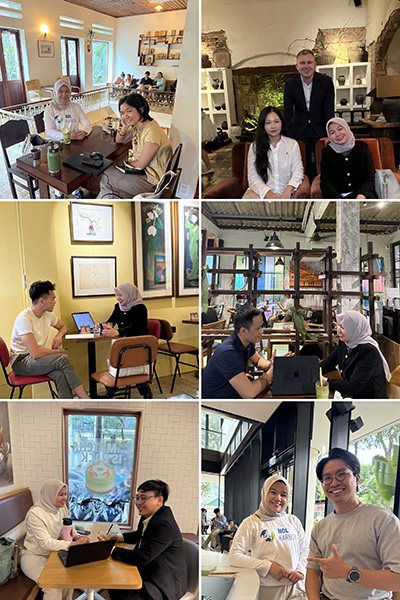
Vietnam left the strongest first impression. The country has become one of the world’s biggest manufacturing hubs, especially for sports apparel and footwear. This scale means Vietnam is not just an “emerging market,” but a linchpin in global supply chains.
Early manufacturing growth was driven by government incentives such as land grants, tax breaks and infrastructure support. Today, the focus is shifting toward sustainability. New regulations on extended producer responsibility (EPR) require companies to manage waste across the product life cycle, including the post-consumer stage. These obligations are typically phased in, starting with modest targets and scaling over time toward full compliance.
Renewable energy is expanding at a remarkable pace. Vietnam met its five-year target in just two years, landing it firmly in the “VIP” group (Vietnam, Indonesia and the Philippines) that is drawing massive renewable investment. But speed comes with risk: incentives can disappear quickly, creating uncertainty.
Because Vietnam exports so much, external rules like the EU’s carbon border adjustment mechanism (CBAM) push companies to pursue certifications and sustainability audits. Yet financing remains underdeveloped. Large conglomerates dominate environmental, social and governance (ESG) finance, while small and medium-sized enterprises (SMEs) have limited access to green bonds and climate loans.
Vietnam’s lesson is clear: compliance and trade pressure can accelerate adoption, but long-term resilience depends on building financial capacity that smaller players can access.
Thailand: Renewable energy and green finance
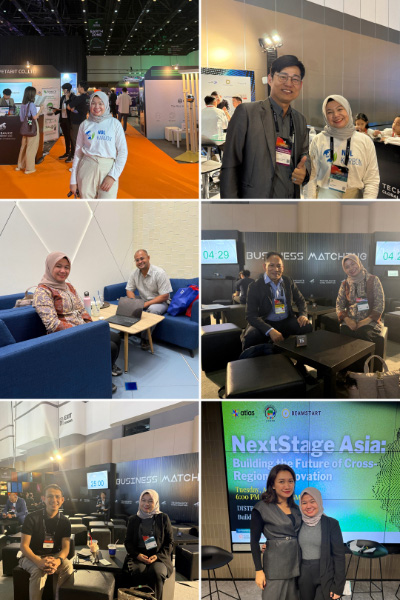
Thailand showed a different picture. If Vietnam is defined by compliance, Thailand is defined by renewable energy and financial innovation. Thai companies are not only scaling domestic renewable projects, but expanding across Asia, from solar to wind to regional infrastructure. This cross-border approach signals a more mature and outward-looking market.
Finance is another driver. Thai banks are competing to lead in ESG. The Bank of Thailand, Krung Thai Bank, Bangkok Bank and others are promoting blended finance and green lending. They actively advise SMEs on how to adapt their business models for the green economy. Unlike in Vietnam, where green finance is still nascent, in Thailand it is mainstream and competitive.
Innovation also thrives in Thailand. Startups are building AI products for customer engagement, and large conglomerates offer free tools to consumers. Yet the real breakthrough will come when these innovations move from marketing into sustainability — for example, applying AI to renewable energy adoption, emissions tracking or waste management.
Culture still plays a role, particularly in community practices around sufficiency and waste reduction. But what stands out is how financial institutions and renewable businesses are driving the national agenda. With policies like a national strategic plan and Green Bangkok 2030, Thailand is positioning itself as a regional leader.
Philippines: Human capital and climate vulnerability

The Philippines revealed yet another model. Unlike Vietnam’s factories or Thailand’s finance, the backbone of the Philippines, particularly in its capital, Manila, is human capital. Strong English proficiency has made the country a global hub for business process outsourcing (BPO). This creates opportunities: Young professionals trained in outsourcing could one day pivot into green jobs and global sustainability services if education aligns.
At the same time, climate change impacts are deeply felt. Manila faces frequent flooding, severe traffic congestion and recurring typhoons that destroy crops. Plastic pollution is another crisis, driven by the “sachet economy,” where millions of small, single-use packages dominate consumption.
Renewable energy, however, holds promise. As an archipelago with fragmented grids, the Philippines depends on decentralized, private-sector renewable projects. This democratization of energy creates opportunities for innovation, even if national compliance frameworks remain less developed.
The Philippines’ Securities and Exchange Commission mandates sustainability reporting for publicly listed companies, similar to Vietnam and Thailand, but broader regulation is evolving. Free tuition at national universities offers a chance to align education with green jobs, building a workforce ready for the global green economy.
Lessons across three markets
Each country taught me a different lesson:
- Vietnam: Compliance and export pressure drive rapid adoption.
- Thailand: Renewable energy expansion and green finance lead the way.
- Philippines: Human resources are the backbone, but climate vulnerability shapes urgency.
Together, they show that emerging markets are not waiting. They are shaping sustainability through their own strengths, weaknesses, opportunities and solutions.
Reflection and next steps
This blog is only a starting point in my study of sustainability in emerging markets. I plan to publish more detailed niche research that captures sector-specific insights such as what sustainability means for textiles in Vietnam, for banking in Thailand and for BPO in the Philippines. Each sector offers openings for innovation.
Looking forward, I want to build on this work by linking AI and sustainability. AI adoption is already happening in general consumer markets, especially in Thailand. But if we can apply AI to sustainability challenges — renewable energy forecasting, ESG finance, waste management and plastic pollution, for example — the impact could be far more powerful. In emerging markets like Vietnam, Thailand and the Philippines, the need is urgent, and the potential is vast.
I did not travel to offer solutions. I went to listen, to understand problems and to see possibilities. From compliance to culture to human capital, each country revealed both limits and opportunities. The next step is to take these lessons and ask, “What technology — what innovation — can accelerate sustainability in ways that are effective, affordable and aligned with real market needs?”
Emerging markets hold many of the answers. Our job is to learn from them.
About the author

Pera Malinda Sihite is an MBA candidate in the Cornell SC Johnson College of Business and the founder of Nol Karbon AI, a climate-tech venture developing AI-enabled sustainability solutions. She previously built Nol Karbon, a carbon project developer in Indonesia, and has worked across nature-based and technology-driven approaches. Her summer work was supported by the Cañizares Center for Emerging Markets, which enabled her to validate key problems, conduct more than 100 stakeholder interviews and build an early-stage minimum viable product during her MBA studies.
All views expressed in articles published on the Cañizares Center for Emerging Markets webpage are those of the author(s) and should not be taken as reflecting the views of the Cañizares Center for Emerging Markets.