
Ethiopia has the playbook. Will it use it? Lessons from Japan and Korea’s rise

Traditional Japanese garden and architecture. Photo credit: Nadiem Ahmed.
Originally from Ethiopia, I grew up in Saudi Arabia, and spent most of my adult life in Canada. This January, with support from the Cañizares Center for Emerging Markets and the Foster Cunningham Fund, I traveled to Japan and Korea as part of a Cornell MBA trek with Mark Milstein, clinical professor and academic director of the Center for Sustainable Global Enterprise. This trip not only opened my eyes to East Asian business and culture but gave me new insights on Ethiopia’s economic development.
What Ethiopia can learn from East Asia
Joe Studwell’s “How Asia Works” clearly defines the playbook behind Japan and Korea’s explosive capital-heavy growth. By directing capital toward strategic industries, Japan and Korea achieved rapid industrialization. Both countries protected early-stage companies in strategic industries until they were ready to compete in global markets. By tying government support to export performance, the countries created companies that competed globally and built the industrial capabilities needed to power long-term growth at home.

This pattern was present in many of the companies we visited. Take Sumitomo and CJ Group, both large, diversified conglomerates that grew within the East Asian development framework. Both companies relied on government support, which came in the form of patient capital and protection. This protection came with the expectation that the companies would compete internationally and bring valuable knowledge back home. This strategy succeeded, and both companies grew into large corporations that now span dozens of markets and industries. Government support was essential, but so was each firm’s ability to think in decades and execute accordingly.
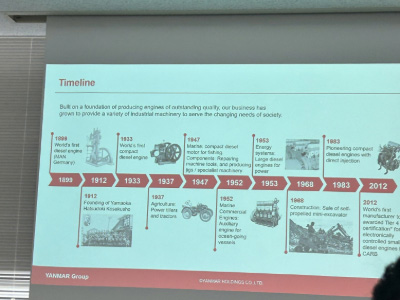
This long-term orientation was evident in how these companies operate. At Sumitomo, the head of corporate development explained the company’s deliberate, consensus-driven decision-making process designed to align the organization around plans that would take years or even decades to play out. Whether with brand reputation, product quality or international expansion, Sumitomo oriented itself toward long-term sustainable growth over speed. Smaller companies we visited across Japan, such as Kewpie, Iichiko, and Yanmar, echoed a similar mindset: Across the board, they emphasized sustained investment, long time horizons and global competition.

As I thought about how this framework might apply to Ethiopia, one company stood out immediately: Ethiopian Airlines. Much like East Asian conglomerates, Ethiopian Airlines benefited from early government backing. Today, Ethiopian Airlines offers flights to 140 destinations across five continents, operating at global standards while prioritizing long-term sustainable growth. More importantly, it has built capabilities that extend beyond a standard airline itself. This includes training 1,000 aviation professionals each year; running one of the region’s largest maintenance operations; and supporting smaller carriers across Africa. Ethiopian Airlines has evolved from a national airline to a platform for Africa’s aviation ecosystem. The secret was being pushed to compete internationally and responding with long-term execution.
Building companies like Ethiopian Airlines requires patient capital, which, in turn, requires governments to retain control over how capital is allocated and when domestic companies are exposed to competition. Opening markets too early can limit a government’s ability to provide sustained support for riskier industrial companies and projects.
This is one of my biggest concerns for Ethiopia. As part of an ongoing reform program supported by the International Monetary Fund, the country has liberalized its currency and started opening key sectors to foreign competition. On paper, these steps signal modernization and deeper integration with global markets. However, timing is incredibly important. Liberalization works best once domestic firms are strong enough to compete internationally. Opening too early often leads to capital flowing toward consumption, real estate and short-term returns rather than long-term industrial investments. We have seen this pattern play out before — in Latin America during the 1980s and ’90s; in Southeast Asia before the 1997 financial crisis; and in various African economies under structural adjustment programs. Rapid liberalization in these countries brought short-term growth but left domestic industry underdeveloped and vulnerable to volatility.
Ethiopia has already demonstrated the power of patient capital with Ethiopian Airlines. It needs to develop many more homegrown global companies if liberalization is to deliver broad-based growth.
The precondition for growth
Ethiopia’s 10-year development plan lays out an ambitious path for industrialization, private-sector growth and institutional reform. The strategy is progressive, but even the best plan requires long-term stability to execute.

Stability has proven difficult to secure in Ethiopia in recent years. In the first two decades of the 21st century, Ethiopia was one of Africa’s fastest-growing economies, growing at roughly 10% per year. Growth slowed to the mid-single digits in the early 2020s as the pandemic and prolonged conflict softened investor confidence. Industrialization takes decades and is not possible without the stability that makes long-term investment possible. Japan and Korea’s decades of relative stability from 1950 to 1980 laid the foundation for their meteoric rise.
The broader lesson for emerging markets

Japan and Korea are sometimes treated as unrepeatable miracles, products of unique cultural or historical circumstances. However, the companies I visited succeeded because their governments gave them time to develop, demanded that they compete globally, and allowed them to reinvest in capabilities rather than extract short-term profits. Ethiopian Airlines followed the same playbook and became a world-class institution.
The question for Ethiopia and for other emerging markets facing similar pressure is whether they will have the patience and stability to build long-term industrial growth. History suggests that countries that resist premature liberalization and maintain the capacity to direct capital strategically will outperform those that don’t.
In a world eager for quick returns, thinking in decades may be the most radical strategy of all.

About the author

Nadiem Ahmed is an MBA candidate at the Samuel Curtis Johnson Graduate School of Management and a Cañizares Center for Emerging Markets fellow. At Oliver Wyman, he helped clients evaluate and develop digital and AI transformation strategies, which sparked his interest in the transformational power of technology. Originally from Ethiopia, raised in Saudi Arabia, and more recently based in Canada, he is drawn to questions about how emerging markets can harness technology to accelerate industrial and economic development.
All views expressed in articles published on the Cañizares Center for Emerging Markets webpage are those of the author(s) and should not be taken as reflecting the views of the Cañizares Center for Emerging Markets.