
From Colombia to Cornell: Pediatric platform wins pitch prize
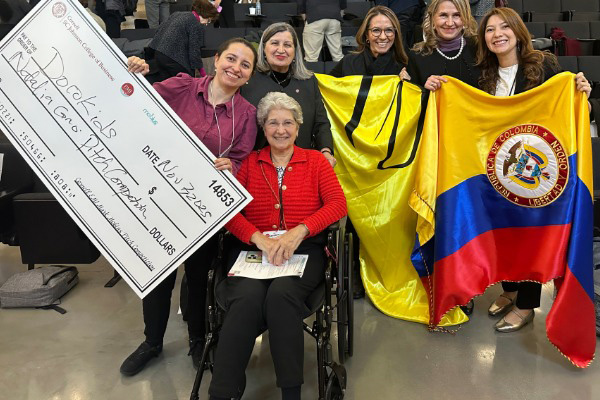
Natalia Cano holding the check, with Lourdes Casanova, Gail Cañizares, Monica Pachon, and Veneta Andonova. Photo credit: Bisoye Ajibola-Taiwo.
When we started the subscription-based pediatric health information site Docokids, our dream was simple but ambitious. We wanted to make high-quality pediatric guidance available to any family at any time, using something as familiar as a WhatsApp chat. As pediatricians working in Latin America, we saw parents spending hours in emergency rooms for conditions that could have been safely managed at home, and we saw families in rural and underserved areas with almost no access to pediatric specialists at all.
In November, that dream reached a global stage at Cornell Tech in New York City, where Docokids was named the winner of the Cornell EMC² Mark Mobius Pitch Competition. The experience was intense, humbling, and inspiring. It reminded us why we do this work and how powerful entrepreneurship from emerging markets can be.
We first heard about the competition through our academic network and entrepreneurial ecosystem. The competition is organized by the Cañizares Center for Emerging Markets in the Cornell SC Johnson College of Business and focuses on student and recent graduate ventures operating in emerging markets. This year’s theme, centered on artificial intelligence innovations for emerging markets, aligned with Docokids. We are building a pediatric digital health platform that combines the expertise and empathy of pediatricians with the power of technology. We use artificial intelligence to make our service more efficient, such as summarizing conversations and identifying patterns. On top of that, we are building our own large language model tailored to pediatric guidance in Spanish, designed to work with human pediatricians rather than replace them.
Preparing the application forced us to sharpen our story and answer some hard questions. We had to explain how Docokids works for a parent in a small town who only has a smartphone and WhatsApp; where artificial intelligence truly adds value without making clinical decisions; and how we can scale responsibly in health care, where trust and safety are nonnegotiable.
Out of many teams from institutions across the world, Docokids was selected as one of the finalists. Standing alongside other startups tackling issues in areas such as health, agriculture and financial inclusion was both humbling and motivating. Although our sectors were different, we shared similar challenges, including infrastructure gaps, complex regulations and the need to build trust with communities that have been underserved for a long time.
The finals took place during the EMC² Annual Conference at Cornell Tech. The conference brought together academics, investors, policymakers and entrepreneurs to discuss how emerging markets can leverage innovation. For us, the conference was just as valuable as the competition itself. We heard from investors and fund managers who have spent decades focused on emerging markets. We learned from other founders confronting big social and economic challenges, and we had the chance to share what pediatric care looks like on the ground in Colombia and across Latin America.
On pitch day, each team had a short window to present, followed by questions from a panel of judges that included competition sponsor Mark Mobius, founder and CEO of Mobius Investments, and experts in investment, technology and emerging markets. Our pitch centered on a simple question. What if parents in emerging markets could reach a pediatrician in minutes, from anywhere, using a tool they already have in their pocket?
We described how Docokids provides access to pediatric guidance 24 hours a day via WhatsApp, helping reduce unnecessary emergency room visits and long trips for families. We explained how our use of artificial intelligence focuses on efficiency and support for pediatricians. The technology helps analyze and summarize conversations, organize information, and surface patterns. We also highlighted that our pediatricians remain at the center of every interaction. We also shared that we are building our own large language model, specifically trained on pediatric content and real-world conversations in our context, to further enhance quality, personalization and speed while maintaining strong clinical oversight.
The questions from the judges were thoughtful and demanding. They asked about unit economics, regulation, data privacy, and our strategy for geographic expansion. They also wanted to understand how we would continue to grow our artificial intelligence capabilities without compromising quality of care or cultural sensitivity. These are questions we work on every day within our team, so having to answer them in that setting helped clarify our priorities and our road map.
When the judges announced that Docokids had won the first prize of $10,000, there was a short second of silence before joy and disbelief took over. Very quickly, we were surrounded by congratulations, questions and new connections. At the same time, we started receiving messages from our team and from families back home in Colombia, who were following the news and celebrating with us from afar.
This recognition matters to us for several reasons. It sends a strong message that pediatric care and maternal and child health are central areas for innovation in emerging markets and that investors and academic institutions are paying attention. It also highlights the potential of Latin American entrepreneurship. Docokids grew out of clinical experience, research and the support of universities and accelerator programs in the region. Being recognized on a global stage shows that solutions created in our context can help set standards for the rest of the world.
The prize money is already tied to a clear next step. We are investing the $10,000 in building an educational platform for parents and caregivers that is closely integrated with our chat service. This platform will offer structured, easy-to-understand content on child health, prevention and parenting. By combining on-demand pediatrician conversations and high-quality educational materials, we aim to increase engagement, improve health literacy and help families feel more confident in daily decisions about their children’s health.
Looking ahead, we plan to continue strengthening our technology and our medical model. We will keep investing in our large language model and in tools that make our pediatricians’ work more efficient while maintaining strict clinical oversight and privacy protections. We also want to build more partnerships with schools, employers, nonprofit organizations and public-sector institutions so that Docokids can reach more families who have limited access to pediatric care.
We left the Cornell EMC² Mark Mobius Pitch Competition grateful for the recognition, feedback, new relationships, and energized to keep working toward a world where no parent has to face a child’s illness alone in the middle of the night, unsure of what to do next.
About the author
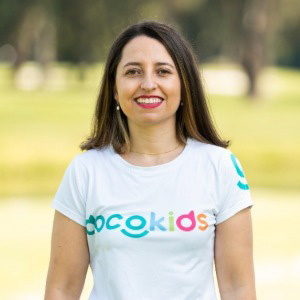
Natalia Cano is a Colombian pediatrician and founder of Docokids, a digital health platform providing 24/7 pediatric guidance to families via WhatsApp. She studied medicine at Universidad de los Andes, completed pediatric training at Georgetown University and pursued a fellowship in pediatric palliative care at Children’s Hospital of Philadelphia. As CEO, she leads Docokids’ clinical and strategic vision, combining pediatric expertise and technology to expand access to trusted child health support across Latin America and beyond.