
From Paris to Cornell: Road to finals at Family Business Case Competition
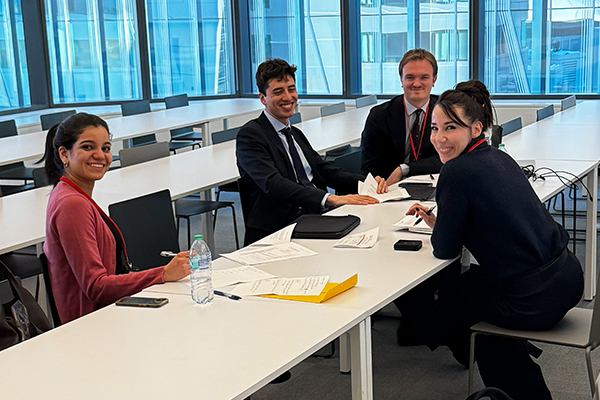
Team SKEMA and coach Ambra Mazzelli huddle in a classroom to prepare for their team’s case competition presentation.
In February, the international business school SKEMA sent me and several classmates to New York City for the Cornell Case Competition for Family Ownership. It was SKEMA’s first time in the competition, and our team placed an impressive third.
The road to Cornell began long before we received the competition invitation. During our first year in SKEMA’s master’s program, the strategy course taught by Ambra Mazzelli, associate professor of strategy and organizations at SKEMA and a Family Business Fellow at Cornell University’s Smith Family Business Initiative (SFBI), gave us the analytical foundation we would later rely on. She taught us to examine businesses from financial and strategic perspectives — skills that would prove essential when facing the complex challenge posed at the competition.
In October 2025, Mazzelli identified 20 top students from her class and ultimately selected three of us to represent SKEMA in the case competition, held February 13-14 at the Cornell Tech campus in New York City. My teammates were Riccardo Ciruzzi Manin, who’s earning a master’s in financial markets and investments, and Giacomo Musso, who is earning a master’s in corporate financial management. Our preparation was rigorous. Working with Johan Barchechath, director of the financial markets and investments program at SKEMA, we handled logistics and travel arrangements. With Mazzelli, our coach, we dove deep into family business strategy, studying governance challenges, succession planning and the dynamics that make family enterprises fundamentally different from traditional corporations.
In January, two weeks before the competition, Cornell provided us with two past competition cases, Cosan and Flickr, which we practiced on. In the process, we discovered our team dynamics, learning how to divide responsibilities, leverage one another’s strengths and combine individual analyses into cohesive recommendations.
Case A: Covewood Lodge
A week before departing for New York, we received the actual case: Covewood Lodge, a historic Adirondack resort facing a complex succession challenge. It featured a small family business with intricate governance structures, conflicting objectives among family members and limited financial information. We spent the week immersed in the case, strategically dividing responsibilities across key focus areas — business model, governance and family succession — to ensure comprehensive coverage.
Day 1: A humbling start
February 13 arrived with a mix of excitement, nerves and jet lag. After introductions by Daniel Van Der Vliet, John and Dyan Smith Executive Director of Family Business, we drew our presentation slot. There were eight teams, split between two rooms. We were third to present in Room 2. The wait felt endless as we rehearsed our speeches repeatedly.
Finally, we presented our Case A solution to the judges, including Doug Bowes, one of Covewood’s owners. Despite our preparation, we placed fourth in our room. The result was disappointing, but we had no time to dwell on it.
The pivot: When everything changed
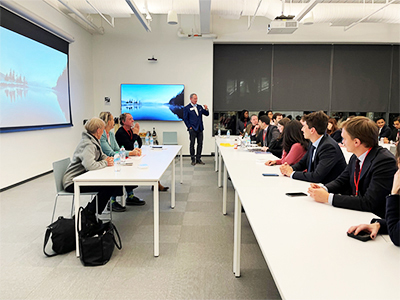
At 3:45 p.m., Case B was distributed. After dinner came the most transformative part of the competition: the family discussion session. Meeting the Bowes family members and hearing their perspectives firsthand completely changed our understanding of the case. Suddenly, the numbers on paper became real people with actual fears, hopes and constraints.
At 7 p.m., we met with our coach for an hour, and she helped us integrate the critical feedback we’d received from the judges, including from Carol Wittmeyer, a Family Business Fellow at SFBI and an author of the Covewood case. We identified what worked, such as our financial analysis and structural thinking, and what needed improvement, including our presentation delivery and alignment with family values. We worked late into the night at our hotel, rebuilding our Case B solution with this deeper understanding of the case and our own strengths and weaknesses.
Day 2: The turnaround
Saturday morning, we refined our presentation. Based on previous standings, we were scheduled to present first in Room 1, this time to family members Kim and Becca Bowes, along with the other judges.
The difference was remarkable. Our revised solution resonated with their current needs. We listened carefully to their concerns about preservation, liquidity and operational burden, and our new proposal addressed each one. After all teams had presented and judges were done deliberating, we learned that we had achieved a massive turnaround: first place in our room. We had advanced to the finals.
Finals: Competing at the highest level
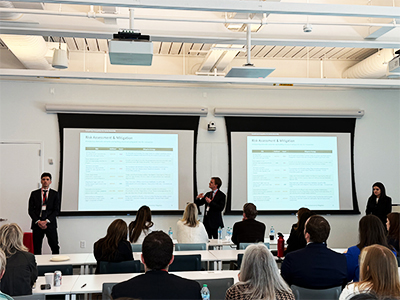
The final round reset all previous scores. Only this presentation mattered, with just 10 minutes to deliver our solution and five minutes for questions and answers. The pressure was immense, but our preparation carried us through. We presented our comprehensive succession strategy with clarity and confidence. When results were announced and we placed third overall, we felt tremendous pride in our journey, going from last place to the finals in less than 24 hours.
Representing SKEMA: A proud moment
Growing up, I was exposed to entrepreneurship through my family’s business, which my grandfather began as a shoe factory after he emigrated from Italy. My father expanded it into retail and distribution and eventually liquidated it. I also worked at a pharmaceutical family business in Caracas, Venezuela, that successfully operated and adapted through Venezuela’s hyperinflation period. When the opportunity to compete at Cornell came up, I researched previous cases, and the Cosan case particularly resonated with me because of its history and the different strategic possibilities it presented. Coming from Venezuela, where many companies originated as family businesses founded by immigrants and developed over generations, I have seen how these businesses often face challenges related to structure, governance and long-term strategy. Analyzing Cornell’s cases allowed me to reflect on how structured analysis and strategic thinking can help businesses evolve and grow.
Competing at Cornell representing SKEMA Business School was an honor. This experience taught us that family business challenges require more than financial models; they require empathy, flexibility and the ability to design structures where competing interests can coexist. We’re grateful to Cornell’s Smith Family Business Initiative for hosting this competition; to the Bowes family for sharing their story; and to SKEMA for investing in our development.
About the author
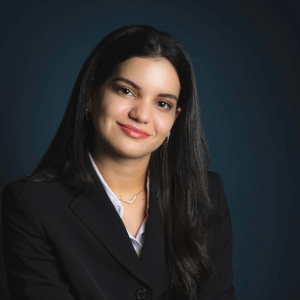
Emiliana Moscato is earning a master’s in financial markets and investments at SKEMA Business School in Paris. She has professional experience across asset management, trading, recruitment consulting and corporate projects, working in the Netherlands, Spain and Venezuela. Her exposure spans fixed income investing, environmental commodities trading and advisory roles, in which she developed a strong analytical and cross-functional skill set. Through these experiences, she cultivated a deep interest in financial markets as a mechanism for capital allocation, risk management and sustainable value creation. She holds a bachelor’s degree in international business with communication studies from the University of Nottingham’s China campus.
Having lived, studied and worked across Europe, Asia and Latin America, Moscato brings a global perspective to business challenges and a strong commitment to long-term value creation. Her academic and professional interests focus on how financial strategy, ownership structures, leadership decisions and generational dynamics influence performance, sustainability and resilience, particularly within family-owned enterprises operating in evolving market environments.