Future proof: What a sake brewer can teach America about sustainability
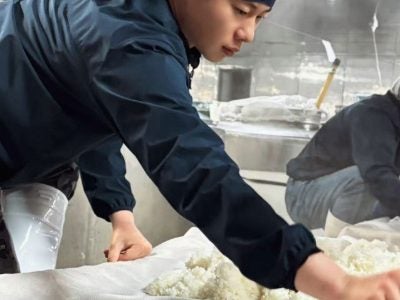
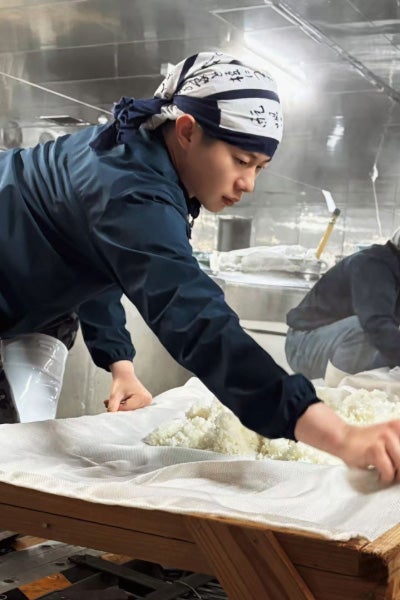
Kaiser working at Kotsuzumi. Photo credit: Kaiser Khoo, MBA ’26.
When sustainability is discussed today, the conversation is often dominated by carbon markets, renewable energy, electrification and climate technology. I focused on these themes while participating in the Center for Sustainable Global Enterprise’s Environmental Finance and Impact Investing (EFII) Fellows program while earning my MBA in the Samuel Curtis Johnson Graduate School of Management at Cornell. During the summer of 2025, my experience at Nishiyama Shuzo in Tanba, Hyogo Prefecture, Japan, forced me to think about sustainability differently. My understanding moved past reporting frameworks and emissions targets and toward sustainability as a question of whether a place can remain economically and culturally alive.
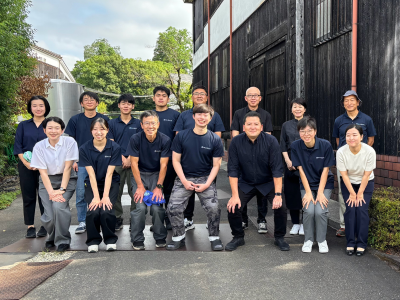
Founded in 1849, Nishiyama Shuzo is the brewery behind the sake brand Kotsuzumi. Located in rural Tanba, the brewery exists at the intersection of fermentation culture, agriculture, hospitality, craftsmanship and regional identity. Several buildings on the property are Registered Tangible Cultural Properties of Japan, reflecting the brewery’s long relationship with the artistic and literary traditions of the region.
Keeping a region economically relevant
Like many rural regions across Japan, Tanba faces increasingly visible pressures: aging populations, labor shortages, declining birth rates and weakening local industries. The sake industry reflects many of these realities directly. Domestic alcohol consumption has declined over time; younger generations are drinking differently; and many traditional breweries face succession and profitability challenges.
What impressed me about Nishiyama Shuzo was not an attempt to escape those realities, but to respond to them. The strategy did not seem centered on abandoning regional identity in pursuit of scale or profit. Instead, it seemed focused on making the region economically relevant again.
In 2024, the brewery launched Koden, a cultural complex integrating fermentation, cuisine, hospitality, accommodation and art. Visitors do not simply purchase sake there. They encounter the broader ecosystem surrounding Tanba through local ingredients, architecture, workshops and culture.
According to the company, visitor traffic increased approximately sevenfold following the launch of Koden. More importantly, the audience expanded beyond traditional sake consumers to include tourists, families and nondrinkers. Traditional industries may no longer survive by selling products alone. Increasingly, they may need to monetize experience, identity and place.
Connecting coursework and experience
My MBA coursework, including the Strategies for Sustainability course taught by Mark Milstein, clinical professor of management and organization and academic director of the Center for Sustainable Global Enterprise, often emphasized that long-term value creation depends on rethinking how businesses create economic and social relevance simultaneously. In Tanba, that idea stopped feeling theoretical. None of these efforts felt performative; the brewery was not presenting sustainability as branding language detached from reality. Tourism created demand beyond sake. Hospitality created reasons for visitors to remain longer, spend locally and engage with the surrounding region. Fermentation, food, accommodation and craftsmanship became interconnected. Economic value circulated across local suppliers, restaurants, farms, artisans and tourism operators instead of remaining concentrated within a single business.
In many conversations surrounding sustainability, rural economies are often discussed primarily through preservation or subsidy. What I observed in Tanba suggested something different: Regional continuity may depend less on protecting the past and more on creating reasons for economic activity to remain rooted locally.
Culture as economic infrastructure
One of the clearest lessons from my experience was realizing that culture can function as infrastructure. Often, cultural preservation is treated as nostalgia rather than as economic strategy. In Tanba, culture operates as differentiation. Nishiyama Shuzo collaborates closely with regional farms, dairy producers, soy sauce makers, meat suppliers and specialty food producers. These relationships are integrated into the hospitality experiences surrounding Koden.
In many developed economies, rural decline is often discussed as if it were inevitable. Nishiyama Shuzo demonstrates that’s not the case for Tanba, which is profiting from creating forms of value that urban centers cannot easily replicate.
What rural America can learn
Across the United States, many rural communities face shrinking populations, aging workforces, declining industries and the erosion of local identity. Economic revitalization is often framed around attracting external corporations or large-scale industrial investment. While those investments can matter, my experience in Tanba suggested another possibility.
Communities do not always need to abandon their identity to remain economically viable. As Tanba illustrates, regional culture, agriculture, food systems, craftsmanship and tourism can be an economic advantage.
Reflecting on my experience
Before arriving in Tanba, I expected sustainability to be measured primarily through frameworks, metrics and financial models. Nishiyama Shuzo challenged me to think about sustainability in a quieter and more fundamental way. I began to think about sustainability less as a category and more about durability — whether industries, communities and local ecosystems can remain relevant across generations without losing their identity. In many rural regions, the defining question may not simply be how to generate growth, but how to keep a place from fading once the future begins pulling people elsewhere.
About the author

Kaiser Khoo is an EFII Fellow and an MBA candidate in the Johnson School’s Class of 2026. His interests focus on long-term value creation; operating businesses; and the evolving relationship between capital, culture and economic resilience. He is particularly interested in how enduring brands, regional ecosystems and institutions shaped by identity and place remain relevant across generations. In 2025, he served as a strategic finance intern at Nishiyama Shuzo in Tanba, Japan, where he explored the intersection of rural development, cultural continuity and sustainability. He also holds the professional Master of Sake qualification.
Article Information
- Categories
-
- Blog Posts