Park Perspective: Leading without authority
Leadership, for a long time, felt synonymous with authority to me. A title. A clear hierarchy. Formal decision rights. I was comfortable leading when the lines were clearly drawn, such as when my roles gave me permission to direct people and projects, make decisions and drive outcomes. What I struggled with was a quieter, more ambiguous form of leadership: leading peers, influencing without authority and trusting others enough to share control.
Coming into business school, I didn’t realize how often I would be placed in exactly these situations. The Roy H. Park Leadership Fellows program, in particular, pushed to think about how I would lead in contexts where influence mattered more than position and where self-awareness mattered more than certainty. Through my Park sessions, I have learned to not only confront how I lead, but face why I lead the way I do.
Pre-MBA: Competent, driven, yet guarded
Before my MBA, I had built confidence through competence. I took pride in being reliable, prepared and detail oriented. However, I found it difficult to trust people because delegation felt risky, and letting go of control felt like inviting the potential for failure.
This mindset shaped how I showed up in group settings. I often did more myself rather than rely on others. I led through execution rather than empowerment. While this approach produced results, it also limited my growth — and maybe the growth of those around me.
The Park Fellowship gave me the language and the space to examine this pattern. Through reflection, feedback and coaching, I saw how my reluctance to trust was a constraint.
The practice of influence
One of the most impactful lessons from the Park Fellowship has been that leadership is less about control and more about credibility, clarity and care. Influence doesn’t come from telling people what to do; it comes from earning their trust, aligning them around a shared purpose and trusting them in return. I learned new behaviors: asking instead of assuming, listening instead of fixing and trusting instead of micromanaging. These were small shifts, but they required internal work.
Leading the West Coast trek
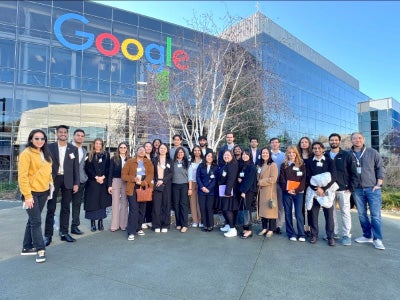
The true test of these lessons came when I took on my role as a West Coast trek lead for the High Tech Club (HTC). I was responsible for leading a group of MBA students from Cornell’s Ithaca, New York, campus and the Cornell Tech campus in New York City to the West Coast to visit companies, connect with alumni and gain exposure to the tech industry. Particularly challenging would be how to gain the trust of my Cornell Tech peers, as we had never interacted in person prior to this trek.
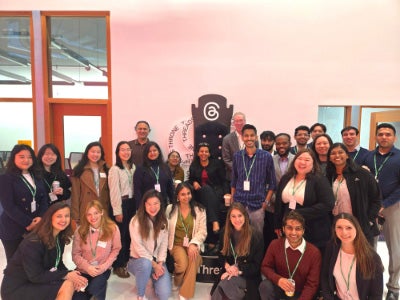
On paper, the role was exciting. In practice, it was intimidating because I was leading my fellow students at the same academic level with similar ambitions and accomplishments — and strong opinions. I had no formal authority to lean on. If I wanted this trek to succeed, I had to rely entirely on influence.
Navigating peer leadership
The challenges surfaced quickly: coordinating logistics across campuses; managing expectations; communicating expectations; influencing alumni to let me collaborate with them to coordinate the company visits; and ultimately making decisions that affected everyone’s experience. For months, I had been planning two company visits, knowing that the people I was leading could easily question my leadership or disengage.
My old instincts kicked in. I felt the urge to do everything myself, to minimize risk by limiting dependence on others. However, I relied on my lessons from the Park Fellowship; this was a chance to practice what I had been learning.
I focused on clarity. I communicated the purpose of the trek; the constraints we were working within; and what success would look like for the group. I invited input, acknowledged concerns and made space for collaboration. When decisions had to be made, I explained the rationale rather than relying on positional authority — of which I had none.
Choosing trust over control
Perhaps the most transformative choice I made was to trust my fellow students. I delegated responsibilities, even when it felt uncomfortable. I accepted that not everything would be done exactly the way I would do it. I reminded myself that leadership is not about perfection; it’s about progress and people.
What surprised me was how the group responded. When I trusted them, they rose to the occasion. The trek became a positive shared experience rather than a managed one. Visiting Google and Meta wasn’t just about learning from alumni; it became an exercise in collective leadership.
Confidence reframed
By the end of the trek, my confidence no longer came solely from being the most prepared person in the room. It came from knowing I could guide a group without dominating it; that I could lead without a title; and that I could trust others without losing standards.
The Park Fellowship helped me understand that confidence is not the absence of doubt. It’s the willingness to act despite it. Leading without authority requires humility, emotional intelligence and belief in the capabilities of others.
Carrying the lesson forward
As I continue my MBA journey, I now understand that leadership shows up in ways that are informal, unassigned and easy to overlook. Whether I am stepping into future student leadership roles, contributing to club initiatives, or collaborating on group projects, I know that influence will matter more than titles.
The lessons I’ve learned through the Park Fellowship and the West Coast trek have reshaped how I approach these moments. I am more intentional about building trust early, creating clarity around shared goals and making space for others to contribute meaningfully.
I’ve come to appreciate that leadership is not reserved for formal roles; it is practiced daily, often quietly, in how we listen, communicate and support those around us.
Leading without authority is no longer something I fear. It’s something I am learning to embrace.
About the author

Ketaki Joshi is a first-year MBA student at the Samuel Curtis Johnson Graduate School of Management, a Roy H. Park Leadership Fellow, Forté Fellow and Courageous Communications Fellow. She is pursuing roles at the intersection of product and marketing. After earning a bachelor’s degree from Cornell’s School of Industrial and Labor Relations, Joshi accumulated five years of professional experience in human resources, most recently in executive and regulatory compensation at Citigroup, where she led cross-functional initiatives to improve internal performance management and compensation practices, supported senior executives on complex regulatory matters and drove adoption of a firmwide human resources technology platform. At Johnson, Joshi serves as vice president of external affairs for the High Tech Club and is a member of the Corporate Leadership Club and the Women’s Management Council.
Article Information
- Categories
-
- Blog Posts
- Tags
-
- Park Perspectives