Beyond the blueprint: Lessons in entrepreneurship
By Lam Ngo
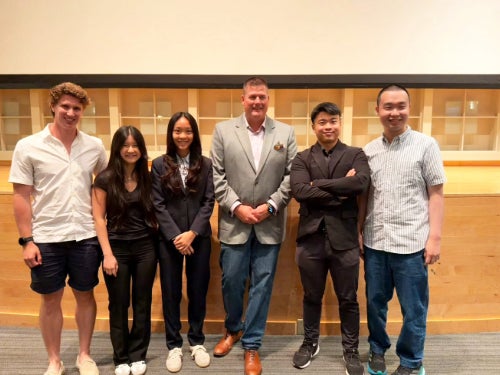
This past summer, I spent three weeks at Cornell University taking the course Future Founders: Leadership and Innovation Toolkit, an entrepreneurship course for high school students developed by the Smith Family Business Initiative (SFBI) at the Cornell SC Johnson College of Business. I decided to apply to the program after hearing about the SC Johnson College’s distinguished reputation, and I wanted to test myself in an environment known for pushing students to think and build like real founders. I did not expect that in just three weeks, I would come away feeling prepared to start a business of my own or to support my family’s business as an entrepreneur in my own right.
A program built around real practice
The course, offered through the Pre-College Studies Program in the School of Continuing Education, was led by Bradley Treat, visiting lecturer of management in the Samuel Curtis Johnson Graduate School of Management. From the first day, it was clear this would not be a class about theory alone. Treat taught us the fundamentals of business — and being a businessperson: how to network, how to carry yourself in a room and how to lead with confidence.
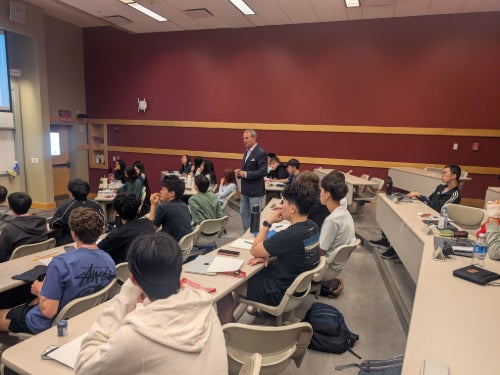
One moment that stood out was a teaser lesson on family business given by Daniel G. Van Der Vliet, John and Dyan Smith Executive Director of Family Business, who was co-teaching a separate course in the program, Family Business Foundations from Generation to Generation. Hearing him speak made me realize how central the role of an entrepreneur really is inside a family business.
Lessons that stuck with me
Treat had a gift for making practical lessons memorable. One of his favorite pieces of advice was what he called “gin and tonic, hold the gin,” a tip for networking events, where you pretend you are holding a drink, except it’s water. This makes you look approachable and at ease. More importantly, you hold it in your left hand and keep your right hand free to shake hands. This may sound like a small detail, but it captures the attentiveness we should give to professional interactions.
He also made sure we understood why networking matters in the first place. Many great opportunities are never posted publicly; they come from people who already have some knowledge of you and your capabilities. He used hiring as an example: Applying through a posting means competing against a large, faceless pool, while reaching out directly to someone you know puts you in a different position. The lesson was simple: Don’t wait for opportunities to come to you; go find them.
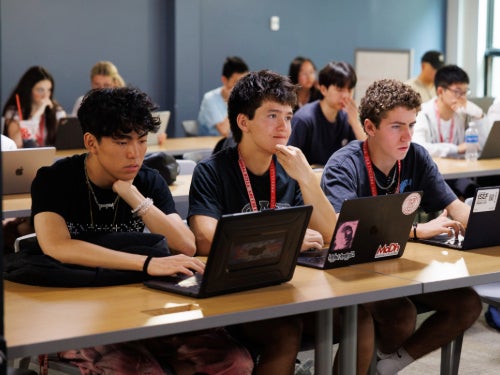
Another lesson that has stayed with me is the idea of needs before production: You don’t start by building a product and then searching for someone to sell it to. You start by identifying a real problem and a real customer. Treat also pushed all of us to get comfortable with public speaking. Nearly every class included some kind of speaking exercise, and by the end of the three weeks, presenting in front of a group felt far less intimidating.
From idea to pitch
One of my favorite exercises was a simulation where we designed a product with no realistic boundaries. It could be anything, even something as far-fetched as a rocket ship, as long as it was based on a real need of someone important in our lives. It was a fun way to practice thinking from the customer’s perspective before worrying about feasibility.
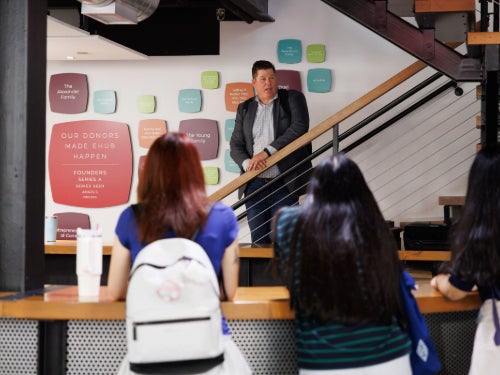
The course culminated in a final group project: a full business pitch presentation. My team’s product was a container designed to keep fresh foods fresher longer using a special preservation mechanism. Getting there wasn’t a straight line. We went through several pivots and multiple rounds of customer discovery, interviewing experts along the way, before landing on the idea we pitched. My classmates came from all over the world — Europe, Asia and the Americas — and the mix of perspectives enriched our discussions.
Rethinking my place in my family’s business
My family runs an offshore wind farm, the largest project of its kind in Vietnam. Before this course, I couldn’t picture myself working in the family business. I wanted to build something of my own, from scratch, with new ideas that were entirely mine. The Future Founders course changed that. I came to understand that being an entrepreneur doesn’t always require starting something new; it can also mean bringing an innovator’s mindset into a business that already exists. I can still be a founder in spirit, even inside a company that my family has already built.
Final reflections

The Future Founders course was eye-opening; though challenging at times, it left me with a toolkit I know I’ll use again. I’m walking away from these three weeks with much more than I expected: new ideas, new possibilities and greater confidence in what I might do with them.
About the Author

Lam Ngo is 16 years old and in grade 11 at United Nations International School Hanoi. She has interned with her family’s offshore wind farm business, organizing events and activities at the site, which is also a tourist attraction. She enjoys helping people, leading teams, thinking creatively through problems and looking for the next idea to build on.
Article Information
- Categories
-
- Blog Posts