Sponsored Projects
Filters
Results

Business Growth Strategy
Based in Namibia, Cheetah Conservation Fund (CCF,) is the world’s leading organization dedicated to saving the cheetah in the wild.
Project: As a result of unpredictable droughts, climate change, and certain livestock farming practices, native thornbush species are growing out of control and are encroaching on open savannah and Namibian farmlands. With 70% of the Namibian population involved in agriculture, bush encroachment poses a major livelihood threat to communities, the cheetah and other indigenous wildlife species. This loss of habitat reduces available farmland as well as habitat for cheetahs, who typically hunt using bursts of speed in open or semi-open savannah, and their prey species. With less usable land for humans and wildlife, human-wildlife conflict is exacerbated. In 2001, CCF and the United States Agency for International Development (USAID) collaborated to find a habitat improvement program that would be ecologically and economically viable. CCF identified a business opportunity: processing encroaching bush into high-heat, low-emission, compacted logs for use as a cooking fuel or for home heating. CCF Bush (PTY) Ltd. (www.bushblok.com) was established to manufacture the Bushblok product. However, the business was constrained by high production costs, low volume sales, and high transport costs. The SGE Immersion team analyzed the business and made recommendations to increase growth and profitability.
Industries: Agriculture, Energy, Social Enterprise
Regions: Africa
Strategic Planning
CARE USA is a leading humanitarian organization that works to fight global poverty while promoting sustainable solutions for individuals and families in the poorest communities in the world.
Project: 2015 was a major year for agreeing on issues such as ambitious, global action on the climate and environment and ecosystems challenges that are driven by human activities — the negative impacts of which are especially prevalent in developing countries where CARE provides services. The impacts of these massive challenges — and the imperative to generate bold solutions — were being recognized across the investor landscape in international development/humanitarian action. Major donors were going climate-resilient, there was a growing social impact investor market, and major corporations had begun aligning around sustainable business initiatives. CARE USA sought to publicly launch an existing but small Climate Change Innovation Fund (CCIF) in the fall of 2015 as a fund-raising/investment vehicle and as public statement of CARE’s commitment to climate-resilience in international development. The SGE Immersion team developed a business case and plan to catalyze support for the CCIF as a priority vehicle for donor engagement and seed-funding CARE’s capacities with its partners and allies.
Industries: Finance & Investing, Social Enterprise
Regions: Africa, Europe, Latin America

Strategic Brand Growth
AMOREPACIFIC (AP) is a leading Korean cosmetics company that offers its cosmetics under the HERA, Sulwhasoo, LIRIKOS, Hyosia, Verite, LANEIGE, IOPE, Mamonde, Hanyul, TeenClear, Primera, Lolita Lempicka, Odyssey, MIRAEPA, INNISFREE, ETUDE, and Espoir brands; personal care products under the Mise-en-scène, Ryo, ILLI, Happy Bath, Dantrol, Median, and Songyeum brands; and health care products under the O’Sulloc, VB Program, VB Solution, Natural Beauty Food, and Ketotop brands. The company also operates OSULLOC, a fine teas business.
Project: AP’s LANEIGE brand, launched in 1994, is a global brand found in 500 department stores and free standing stores (FSS) across 13 countries. Euromonitor ranked LANEIGE as #12 among premium/luxury brands in the Asia Pacific region in 2012. As LANEIGE accelerated its global expansion, it faced the challenge of how to differentiate from competitive products. Given the growing interest among consumers in health, wellness, and sustainability, the company wanted the brand to develop a strategic growth plan that raised brand awareness by using sustainability as a differentiator that would go beyond greening and CSR. The SGE Immersion team developed a strategic growth plan for LANEIGE that would leverage sustainability as a driver of sales and maximize the brand’s identity of “Sparkling Beauty” while remaining consistent with AP’s core values, strategic direction, and principles of “Women, Culture.”
Industries: Apparel, Consumer Products
Regions: Asia
Technology Commercialization Plan
Manure is a major challenge for livestock operations and a threat to groundwater and human health. In 2013, a team of Cornell researchers were funded by the Atkinson Center for a Sustainable Future to create a natural strategy for waste management and developing a profitable animal feed at the same time. In phase I of the project, using dairy manure as a nursery for fly larvae research confirmed a number of key assumptions, including: 1) that cow manure was suitable for house fly larva growth; 2) indications of optimum egg:manure unit weight ratio for growth; 3) the effects of larval growth on manure mass and composition; 4) the nutritional composition of house fly larval meal; and 5) the nutritional evaluation of house fly larval meal. In short, larvae does biodegrade the manure, reducing mass and excess nutrients so that it can potentially be safely sold as organic compost. The harvested larvae could be ground into larva meal—a high-protein food source for animals that substitutes for fishmeal and human food grains.
Project: The SGE Immersion team will explore the commercialization opportunity for scaling a fly larvae business that reduces manure mass and provides feed for the livestock and aquaculture industries by utilizing larvae protein. The team will make recommendations for a business model, potential revenue and costs, and expected profits and loss. It will need to consider the current and emerging competitive environment, as well as the market parameters that will influence potential pricing. The team will have the opportunity to consider an initial valuation of the business and potential revenue sources. Recommendations will need to take into consideration global and domestic opportunities and prioritize customer channels based on specific market dynamics present in different industries that may be served by the technology.
Industries: Agriculture
Regions: US & Canada
Strategic Supply Chain Analysis Project
Team Planet is a for-profit social enterprise focused on providing mobile renewable energy solutions in Africa. Team Planet makes high quality, wearable, lightweight solar products that instantaneously turn a person into a walking solar business. In Malawi, most people walk to pay for electricity as less than 9% have electricity, but 35% have cell phones. The company supports entrepreneurs with training, promotional materials (advertisements), market research, and a customer service plan so that they can sell solar panels and/or the electricity they produce. Team Planet also works with local retailers, NGOs, and individual entrepreneurs to understand the end user in order to continually enhance their products.
Project: The SGE Immersion team evaluated the company’s supply chain optimization model to determine the organization’s ideal structure for growth given that the organization sourced products from China to be sold directly to consumers in Malawi.
Industries: Energy
Regions: Africa
Owner’s Funding Portfolio Assessment Project
Starwood Hotels & Resorts Worldwide is a global, high-end hotel company. Starwood maintains nine distinct lifestyle brands — St. Regis®, The Luxury Collection®, W®, Le Méridien®, Westin®, Sheraton®, Aloft®, Element®, and Four Points by Sheraton® — at 1,169 properties in nearly 100 countries and employs 171,000 worldwide. The company also maintains a vacation ownership model through Starwood Vacation Ownership, Inc. Over the past five years, the company has almost doubled its global luxury footprint. In 2009, an official corporate responsibility function was created — Global Citizenship (GC) — with its primary responsibility to help make the world a better place to experience including finding innovative ways to do more with less. Starwood has set goals to reduce energy consumption 30%, water consumption 20%, and carbon emissions 30% per built hotel room across all global owned, managed, and franchise properties by 2020 — known internally as 30/20 by 20.
Project: Starwood had always assumed the 30/20 by 20 goals would be achieved in 1/3 increments with the first third coming from low to no cost operational changes, the second third coming from capital improvements, and the last third coming through new technology and innovation. The company had achieved the first third goals through its Foundational Initiatives & Programs, but over the past two years, they had realized that technology had moved at a greater than anticipated rate, allowing for additional capital investment to be made for equipment that normally was utilized until the end of its useful life. However, Starwood only owned about 5% of its global properties and relied on property owners to make energy and water efficiency projects come to fruition. Unfortunately, the typical owner’s ROI threshold of 3-5 years was significantly shorter than the 7-15 years required for energy and water efficiency investments. The SGE Immersion evaluated mechanisms that might alleviate the initial capital investment and compel property owners to make the energy/water efficiency investments Starwood sought. The team analyzed a range of options, including a sustainability fund, green hedge or investment funds, investment partners, and revolving funds.
Industries: Hospitality
Regions: US & Canada

Technology Commercialization Project
Standard Hydrogen Corporation is a local, Ithaca-based start-up focused on offering on-site hydrogen production and use, either as a transportation fuel, electricity generation and storage, or both.
Project: In 2014, Ithaca’s TCAT was to put a hydrogen fuel cell bus into operation through the Central New York Fuel Cell Transportation Project. The SGE Immersion team analyzed a commercialization study of the BAE Systems integrated fuel cell electric hybrid bus and supporting infrastructure deployment model to provide vital input on an overall business case for transit operators and OEMs interested in these fuel cell powered bus options.
Industries: Energy
Regions: US & Canada

Strategic Supply Chain Analysis Project
Method is a fast-growing, privately held company that manufactures and markets stylish, eco-friendly products made with non-toxic ingredients that “clean like heck and smell like heaven.”
Project: Method was interested in understanding if there was an opportunity to further localize its supply chain in the Chicago area and to re-design the entire end-to-end supply chain around its new manufacturing plant to further drive down carbon generation and waste — a core component of the company’s strategic identity in the marketplace. The SGE Immersion team evaluated local suppliers and capabilities that could align with the operations of the new facility.
Industries: Consumer Products
Regions: US & Canada
New Business Strategy Assessment Project
Livelihood BASIX, Inc. works for the economic development of the poor in the areas of access to finance, agricultural value chains, and micro and small enterprise development.
Project: LBI was interested in starting one or more development funds to draw from multiple funding sources (e.g., foundations, government agencies, multilateral agencies, and private donors) to pursue multiple investment options, including enterprise development, farming, women-owned businesses, etc. The SGE Immersion team benchmarked similar funds and analyzed the opportunity for LBI to compete effectively in that space.
Industries: Economic Development
Regions: Asia
Technology Commercialization Project
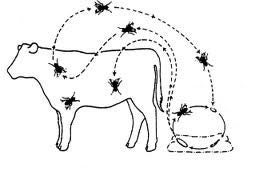
Larvae Co. is the working name of a team of Cornell researchers working to develop technology that addresses agricultural waste management.
Project: The SGE Immersion team explored the commercialization opportunity for scaling a fly larvae business that would reduce manure mass while providing feed for the livestock and aquaculture industries by utilizing larvae protein. The team evaluated business opportunities against the current and emerging competitive environment for waste disposal and animal feed, as well as the market parameters that would influence potential pricing.
Industries: Agriculture, Waste Management
Regions: US & Canada