Building Nol Karbon AI: AI for sustainability and scalable carbon impact
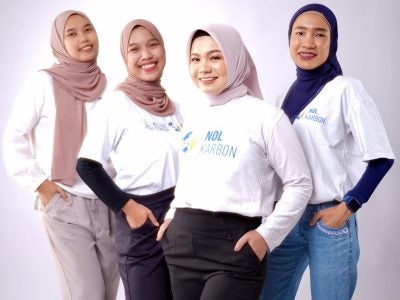
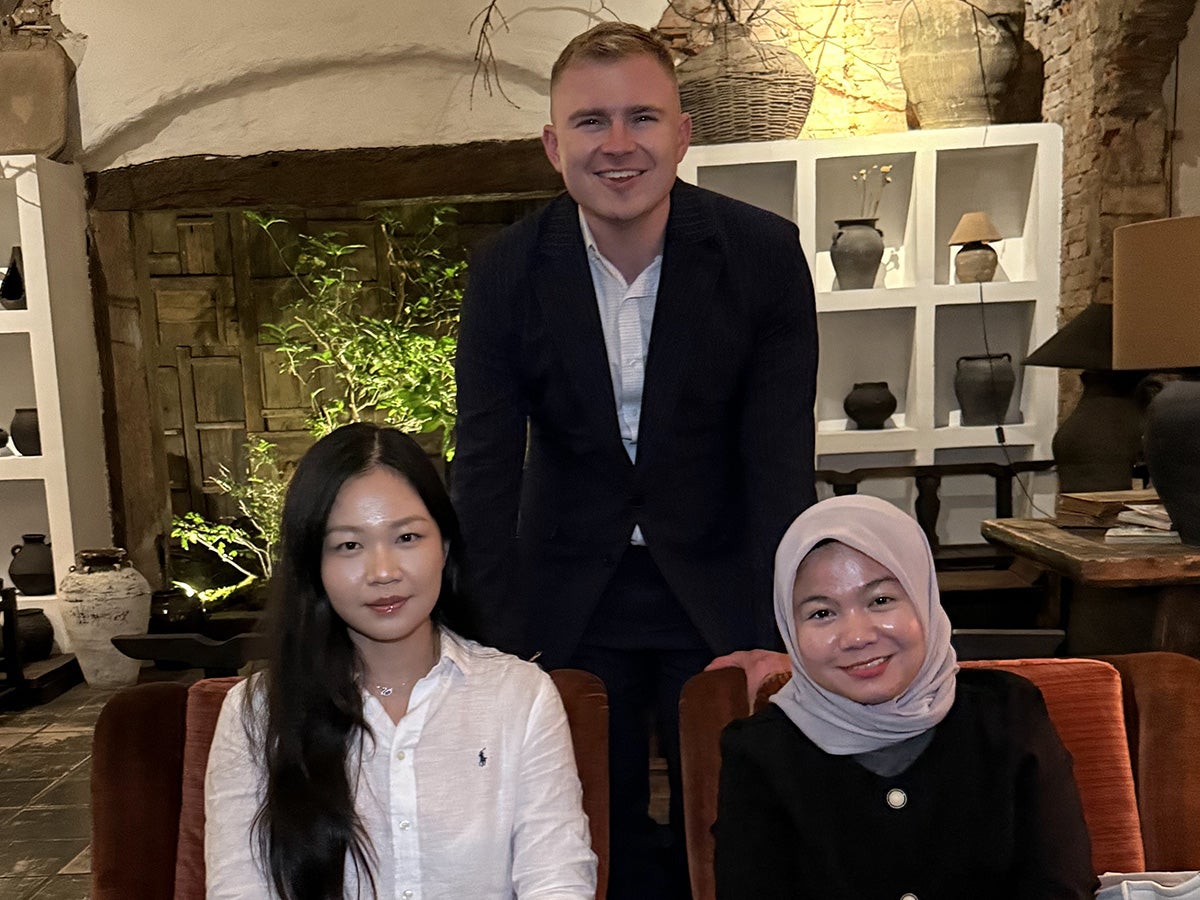
Pera Sihite and her team at Nol Karbon.
By Pera Malinda Sihite, MBA ’26
Through the support I received with the Social Impact Internship Fund (SIIF) from Cornell’s Center for Sustainable Global Enterprise (CSGE), I continued my journey with Nol Karbon in pioneering sustainability-focused AI solutions that unlock the value of underutilized carbon data.
Nol Karbon is a carbon project developer focused on Indonesia’s carbon landscape. During my MBA, I set out to push Nol Karbon toward market-led resilience by leveraging technology. That pursuit gave birth to Nol Karbon AI, a startup dedicated to environmental data intelligence. I recognized an opening for a first-mover advantage: AI solutions designed for sustainability. That vision became Nol Karbon AI.
Why AI?
Artificial intelligence has quickly gone mainstream, yet its use in sustainability remains limited. At the same time, companies face growing pressure to improve their emissions performance for compliance, for investors, for reputation and ultimately to survive in a low-carbon future. To sharpen this idea, I joined the Johnson Summer Startup Accelerator for guidance on frameworks and spent the summer of 2025 conducting on-the-ground market research in Vietnam, Thailand, the Philippines and Indonesia.
Industry-led problem validation
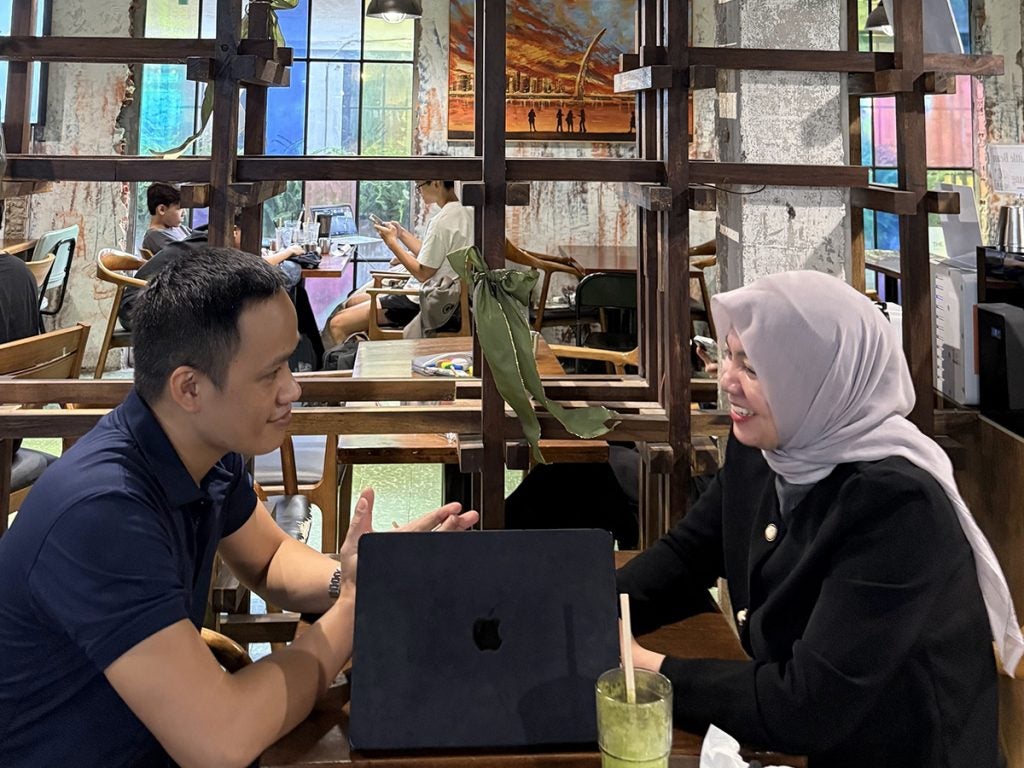
Instead of rushing into product development, I began with problem validation. Because Nol Karbon AI is a business-to-business solution, it made sense to partner directly with industry players rather than rely on individual surveys.
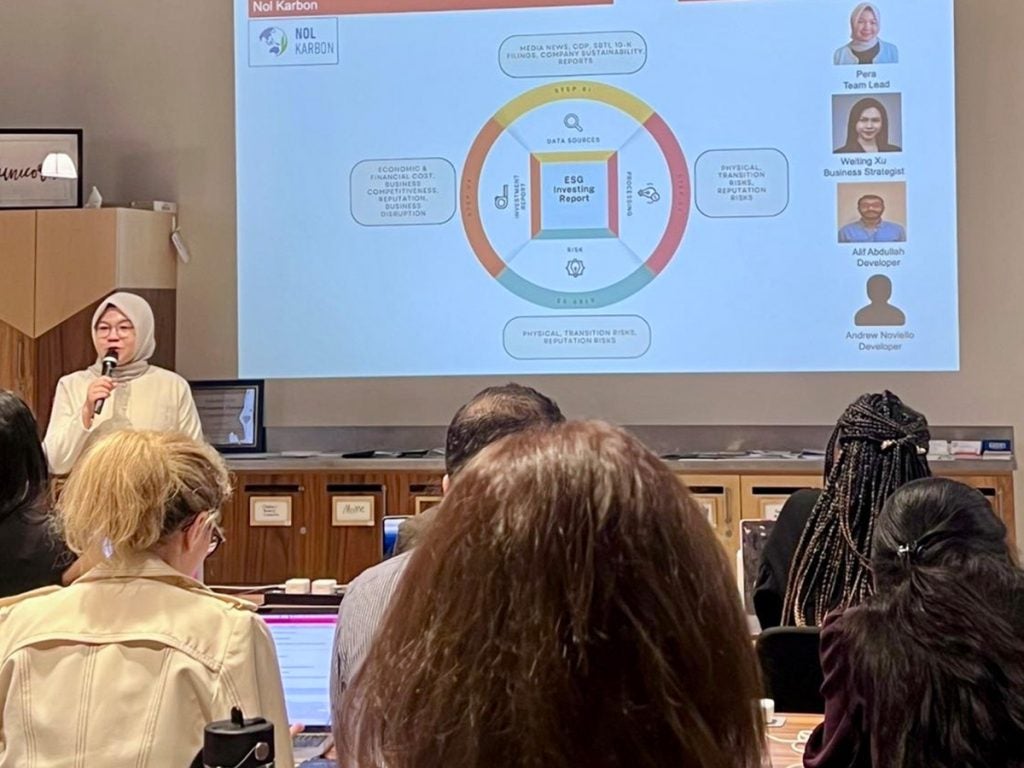
I connected with sustainability consultants, agencies and corporate teams to test whether our AI prototype addressed real challenges. Our early minimum viable product (MVP) showed how AI could analyze emissions reports, benchmark company progress and generate performance scores across multiple frameworks. For many partners, it was the first glimpse of how “AI for sustainability” could look in practice.
The feedback shaped our direction. Some companies wanted supply chain tracking for the Carbon Trust Greenhouse Gas Protocol’s Scope 3 emissions — those that occur upstream and downstream of an organization’s activities, outside of electricity, steam, and heating and cooling — while others needed stronger accountability for ESG (environmental, social and governance) ratings. Agencies in Peru and Singapore viewed Nol Karbon AI as a complement to their services, enabling them to offer more to clients without needing in-house technical capacity. Together, we could deliver AI-enabled insights at a time every climate-tech solution is racing to unlock this opportunity.
User interviews: Learning from more than 100 conversations
I conducted over 100 in-person and online interviews with sustainability experts across Vietnam, Thailand, the Philippines and Indonesia. These conversations uncovered critical gaps as well as new opportunities.
In Southeast Asia, compliance systems are still emerging. Regulations are fragmented, often limited to extended producer responsibility (EPR) for waste management or voluntary disclosures by global firms. Yet every country has published its own road map toward net-zero emissions, signaling likely regulatory tightening.
From these interviews, we identified the following potential markets for Nol Karbon AI:
- Corporations seeking to manage Scope 3 emissions and leverage underutilized data.
- Governments tracking emissions at city, provincial and national levels.
- Investors measuring climate impact in their portfolios.
- Industries like fast-moving consumer goods (FMCG), oil and gas, and insurance, each with specific compliance needs.
- Global supply chains preparing for Europe’s carbon border adjustment mechanism (CBAM) rules, which will penalize carbon-intensive imports.
The takeaway is clear: while sustainability challenges differ by market, the shared issue is underutilized data amid tightening regulatory pressure. Across Southeast Asia, this plays out in different ways, from manufacturing-driven emissions in Vietnam to ESG-led finance in Thailand to climate resilience and waste management in the Philippines. Yet all are moving toward tighter emissions regulation, stronger accountability and accelerated net-zero road maps. This creates a clear opportunity for Nol Karbon AI.
Building the MVP and designing business onboarding
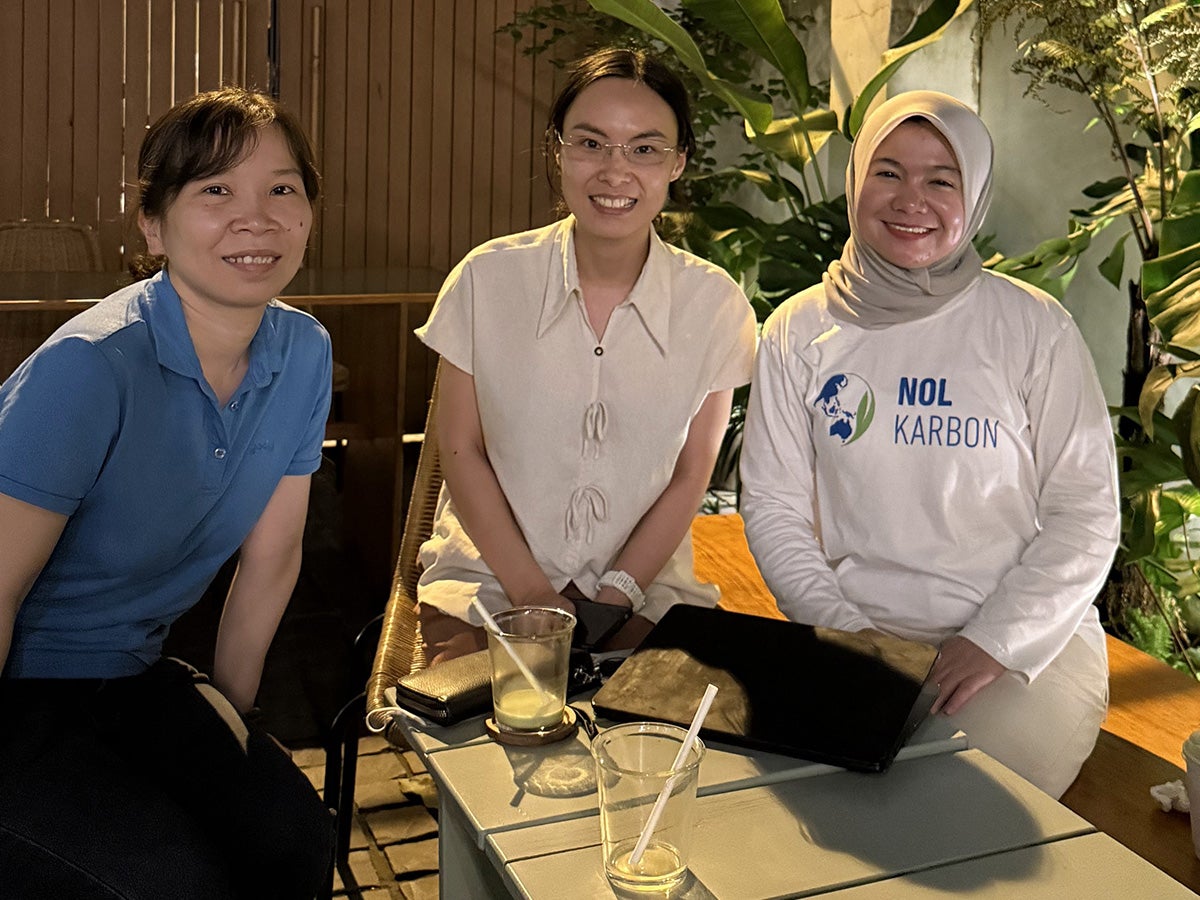
The third focus of my internship was building our minimum viable product (MVP). We designed a mock-up AI tool that could interpret sustainability reports and generate actionable insights. This was more than a demo; it was an invitation to cocreate. By letting companies test and critique the MVP, we kept development grounded in real user needs.
Next, we will move into business onboarding, converting interested users into active partners and piloting solutions with them. In parallel, we are preparing to publish a comprehensive research report, positioning Nol Karbon AI as both a platform and a thought leader for AI in sustainability across emerging markets.
Lessons learned
Over the summer, I validated problems through industry partnerships, gained insights from more than 100 interviews, built and tested an MVP, and began forging cross-border partnerships while starting business onboarding. Those conversations have given me the confidence in AI’s ability to adapt to sustainability challenges from emissions reporting to impact investing. Nol Karbon AI’s strength lies in building technology that is adaptable, scalable, and anchored in clear key performance indicators and metrics aligned with industry needs.
I am deeply grateful to the Social Impact Internship Fund enabling me to explore and test sustainability data and unlock new value from it.
I believe that collaboration beats competition and that technology is the accelerator. When the two come together, they create scalable solutions for climate impact, and that is the future I am committed to building.

About the author
Pera Malinda Sihite, MBA ’26 and 2026 Semlitz Family Sustainability Fellow, founded Nol Karbon AI, a climate-tech venture pioneering AI for sustainability solutions. She previously built Nol Karbon, a carbon project developer in Indonesia, and has worked with both nature-based and technology-driven solutions. Through Nol Karbon AI, she integrates AI with sustainability data to help companies, governments and investors accelerate progress toward net-zero emissions.
Article Information
- Categories
-
- Blog Posts