The Future Food Equation: Rethinking Growth, Value & Survival in F&B
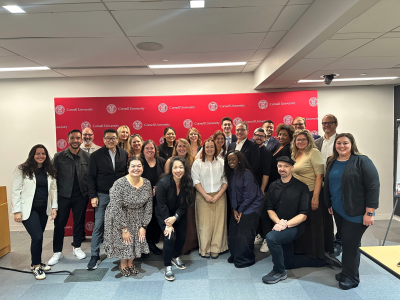
The roundtable centered on a guiding question: As the economics, expectations, and structures of the food industry change, how do we build businesses that are financially viable, resilient, and still meaningful to the people and communities they serve?
Across the four sessions, participants broadly agreed that many of the pressures facing food businesses are structural. Food, labor, rent, construction, insurance, financing, and other costs are moving at the same time, with fewer places for operators to absorb those increases. Workforce expectations have changed. Technology is creating new capabilities and changing how restaurants operate. And many of the assumptions that have historically shaped restaurant growth, from unit expansion to labor models to the role of the physical restaurant itself, are being reconsidered.
There was much less agreement about what businesses should do in response, and that was part of what made the discussion valuable. Some participants are expanding across multiple channels while operating fewer restaurants; others are intentionally remaining small and local. Some are investing heavily in systems and technology; others are deliberately protecting parts of the business from too much automation. Even ideas like growth, scale, productivity, and success meant different things depending on the business and the operator.
The roundtable was not intended to produce a single model for what comes next. Instead, the discussion provided a chance to look more closely at the choices food businesses are making, what is driving those choices, and where there are still considerably more questions than answers.
The economics require more fundamental choices
The economic discussion went beyond the fact that restaurants are expensive to operate. Food, labor, rent, construction, insurance, financing, and other costs are all moving at once. The problem is not any one of those costs. It is what happens when they move together and there are fewer places in the business to absorb the increases.
The conversation also questioned how well the traditional restaurant model worked in the first place. Historically, some businesses were supported by owners not paying themselves appropriately, employees working extremely long hours for relatively little money, favorable leases, or costs being absorbed elsewhere. Some of what now looks like a breakdown in the model may simply be the disappearance of conditions that allowed a bad business model to work for a long time.
Operators are responding with changes that go well beyond menu pricing. Restaurant size, operating days and hours, staffing levels, menu complexity, equipment, real estate, construction requirements, and whether another restaurant is the right use of capital were all part of the discussion.
There was also a noticeable amount of uncertainty about how to operate now. Decisions about where to open, which formats will work, and what constitutes an acceptable return were described as much harder to predict than they once were.
Growth does not necessarily mean opening more restaurants
For some businesses, growth still means opening additional restaurants. But participants also described businesses closing conventional locations while expanding into catering, private events, consumer packaged goods, wholesale, universities, airports, partnerships, and other channels.
Those opportunities can make sense, but none is an automatic solution to profitability. Airport and stadium locations may provide exposure without producing particularly attractive financial returns. Retail can look like a natural extension of a restaurant brand until the business has to manage production, inventory, distribution, packaging, marketing, and an entirely different set of margins.
Success itself was also defined in very different ways. Revenue and unit count came up, of course, but so did profitability, longevity, quality of life, community impact, and the ability to build a business that an operator actually wants to continue running. A packed restaurant or a business receiving significant attention can still have poor economics. A company closing locations may actually be getting healthier.
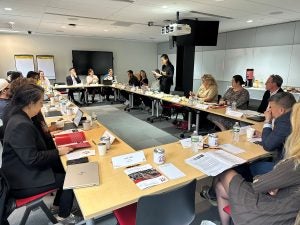
As businesses operate across more channels, the role of the physical restaurant can change as well. For some participants, catering, private events, corporate business, retail, manufacturing, partnerships, and other revenue streams have become critical to making the overall economics work.
That does not make the restaurant itself unimportant. The physical restaurant may be doing work that is difficult to see on a traditional restaurant P&L. It can establish credibility, introduce customers to the brand, create community, provide the fullest version of the experience, and make other parts of the business possible. But that raises a question about what customers actually value about the original business and whether that value carries over into something else.
The workforce conversation is also an operating-model conversation
Work-life balance, predictable time off, scheduling autonomy, and flexibility were all discussed as part of the staffing challenge. Restaurants are not just competing for staff against other restaurants, but also gig work and other industries that can offer greater flexibility and autonomy.
Operators are responding in different ways: five-day workweeks, smaller teams, simplified menus, flexible labor pools, self-scheduling, and changes to physical restaurant design and equipment.
But labor is difficult to separate from the rest of the operation. A complicated menu creates labor. Equipment choices affect labor. The layout of a kitchen affects labor. Hours of operation, service style, training, technology, and management practices all affect how many people are needed and what those jobs are like.
The discussion also raised a broader question about whether the industry has sometimes treated the workforce problem as a search problem: how do we find enough people willing to do the jobs we have already designed? Part of the answer may instead be reconsidering the jobs and operating models themselves.
Technology is changing what is possible, particularly for smaller operators
The conversation about technology and AI was much more practical than speculative. Participants discussed using technology for forecasting, purchasing, cost analysis, production planning, marketing, administrative work, and other parts of the operation.
Some of this is especially useful for smaller operators. Tasks that previously required significant time, specialized staff, or expensive systems are becoming much more accessible. An independent operator can now analyze purchasing, margins, production, or customer behavior in ways that would have been difficult to do even a few years ago.
But greater efficiency does not always have to mean fewer people or fewer hours. If technology eliminates several hours of administrative work for a general manager, there may be more value in having that manager spend those hours training employees, solving problems, interacting with guests, and actually managing the operation than in immediately treating the saved time as labor to remove.
There were also clear limits to what participants expected technology to solve. Better forecasting does not fix a poorly designed menu. More data does not necessarily make someone a better manager. A system may identify that labor is high or purchasing is off, but someone still needs to understand why and decide what to do about it.
The same issue came up around operating systems more broadly. Systems are essential, particularly as businesses grow, but there was concern about what happens when people become very good at operating within a system without developing the judgment to deal with situations the system has not anticipated. Ultimately, running a restaurant still requires someone to understand what is happening, make a decision, manage people, or interact with a guest.
The customer relationship is becoming more complicated
Restaurants now reach customers through a growing number of third party tech–delivery platforms, reservation systems, social media, loyalty programs, and other technology. Which can make it very difficult for a restaurant to know who its customers actually are and engage with them in meaningful ways to develop loyalty.
A restaurant can have a customer who orders regularly through a platform and still know almost nothing about that person. Even with significant menu markups, the economics may not be particularly attractive, and the restaurant does not necessarily control the customer data or what that customer sees the next time they open the app.
There was a similar challenge with social media. It has become an incredibly important discovery tool, but attention and loyalty are not the same thing. A sudden influx of customers can be valuable, but some operators were much more interested in the people living within a few miles who return regularly than in creating a moment that generates enormous short-term demand.
Delivery also changes the experience itself. The food may be worse after traveling, the restaurant has little control over what happens between its door and the customer, and there is almost no opportunity to recover when something goes wrong.
It was clear that a major challenge was how much of a customer relationship can be preserved as businesses grow and as more of the customer journey happens somewhere other than inside the restaurant.
—–
The day-long discussion did not produce a single answer for what a successful food business should look like going forward. What it did make clear is that many of the assumptions that have traditionally shaped restaurant economics, growth, labor, technology, and customer relationships are being reconsidered at the same time.
Key takeaways
- The economic pressure is not coming from one place. Food, labor, rent, construction, insurance, financing, and other costs are moving together, forcing operators to reconsider more fundamental parts of the business.
- Growth does not have to mean more restaurants. Additional units remain one path, but catering, events, retail, wholesale, partnerships, and other channels are becoming meaningful parts of how some food businesses grow. Those channels also bring their own economics and complexity.
- The physical restaurant can have value beyond the revenue it generates. It can build the brand, create community, develop customer relationships, and make other parts of the business possible.
- Workforce challenges cannot be separated from operating design. Menu complexity, equipment, space, scheduling, technology, training, and service style all influence the amount and type of labor a business needs.
- Technology can expand what operators are able to do, but it does not eliminate the need for management judgment. Better tools can create efficiencies and provide better information. Someone still needs to understand the business and decide what to do.
- Reaching a customer and having a relationship with that customer are different things. Delivery platforms, social media, reservation systems, and other intermediaries can provide enormous access while also creating distance between the business and the people it serves.
- There is no obvious single model for what comes next. Some businesses will get larger, some smaller, some more diversified, and some more focused. The choices depend on where the business actually creates value and what the operator is trying to build.
About Pillsbury Institute for Hospitality Entrepreneurship Roundtables
Pillsbury Institute Roundtables are designed to bring together people who are shaping the hospitality industry for meaningful conversations that do not always happen in day-to-day work.
The format is intentionally small and discussion-based. There are no panels or formal presentations. Instead, participants are invited because of the unique perspective they bring and are encouraged to share experiences, ask questions, challenge ideas, and learn from others across the industry.
By connecting leaders from different backgrounds, including entrepreneurs, operators, executives, faculty, and students, these conversations create opportunities for new ideas, relationships, and collaborations.
Article Information
- Categories
-
- Blog Posts