A summer powering the future of AI infrastructure
An energy conference led to a summer MBA internship inside a medium-voltage solid-state transformer manufacturer, building the market and financial strategy behind the future of critical power infrastructure.
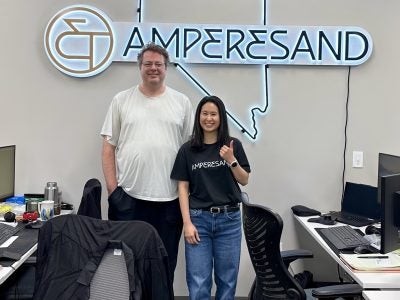
Raissa Pramudi, MBA '27 with Brian Dow, the CEO of Amperesand. Image credit: Provided by author
By Raissa Pramudi, MBA ’27
Samuel Curtis Johnson Graduate School of Management, Cornell University
How a Cornell energy conference led to my summer internship
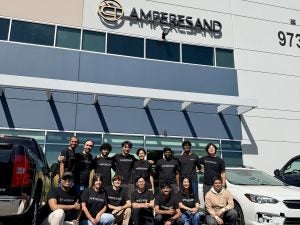
As part of the Cornell Energy Club, I helped organize the 2025 Cornell Energy Connection under the guidance of the Center for Sustainable Global Enterprise. This is an annual event and will return to the Cornell Tech Campus in New York City on November 20th, 2026. At the 2025 conference, I met Brian Dow, who was a speaker at the conference and CEO of Amperesand. After hearing him speak and engaging him in conversation during the networking lunch, I grew more interested in solid-state transformers (SST) due to Brian’s passion for the technology, despite the skepticism it faces in the industry. That is how we stayed connected and eventually talked more about an internship opportunity.
Additionally, Monica Touesnard, Associate Director of Sustainability Careers at Johnson’s MBA Career Management Center, helped me think through my career goals and connected me with energy practitioners. With her mentorship, I learned more about the energy sector and career opportunities. Taking advantage of career resources on campus to prepare and engaging in conversation at Cornell Energy Connection led to my internship with Amperesand.
Building the next generation of power infrastructure
This summer, I worked as an intern of the Business Strategy team at Amperesand, a startup building medium-voltage (MV) solid-state transformers (SSTs). I split my time across five different projects, ranging from cost modeling to market segmentation. It was an internship that put everything I had learned in my pre-MBA career and at Johnson into practice, and it opened my eyes to the latest challenges and developments in the energy sector.
Every conversation about artificial intelligence eventually runs into the same bottleneck: electricity. As the models keep getting larger, the data centers’ capacities continue to grow against a backdrop of power infrastructure that was never designed to support power demand growing this fast.
Amperesand is specifically building medium-voltage SSTs for high-voltage AI data centers. They are working with hyperscalers on product pilots and plan to launch commercial units this year, in 2026. They build, test, and manufacture the devices at their own manufacturing site in Reno, Nevada.
The SST is a power electronic device that uses semiconductor switches to actively control power flow. It consolidates several conventional electrical equipment components into a single, smaller-footprint device. This new technology enables higher power density and efficiency, which is increasingly important as power demand grows.
Putting a dollar value on SST adoption
Customers adopt new power infrastructure based on advanced technology and the numbers: how much less will this cost to build, and how much less will it cost to run over the years? To investigate these variables, my first project was a total cost of ownership(TCO) model comparing the traditional electrical equipment with Amperesand’s SST architecture. I started off by drawing on interviews with data center engineers and public data for the traditional architecture case. Then, I modelled the difference with Amperesand’s technology and new architecture. The result was cost savings from reduced electrical equipment capex and lower energy losses, quantitative value that the commercial team can bring into customer conversations.
Exploring additional markets for MV SST
My next project focused on answering a different question: where should Amperesand focus next?
I built a market segmentation analysis, grouping SST opportunities by customer type and power conversion needs, then sizing the addressable market for the most promising segments at both the global and U.S. levels. I learned that there is significant opportunity in the SST market. Applications across solar, energy storage systems, the grid, EV charging, and heavy industry provide significant benefits. For example, in energy storage and solar, SSTs can play an important role in managing the fluctuations of renewable energy.
I also built a competitive landscape assessment, evaluating SST players based on commercial readiness and technology performance. Through these exercises, I gained a better understanding of Amperesand’s position in the competitive landscape and came to believe that Amperesand is a leading player in the market. The company has a dedicated development and manufacturing site in Reno, Nevada, and is targeting a 10 MW single-unit MV SST, which is the highest power conversion capacity among the players I assessed. Furthermore, Amperesand is led by former Tesla leaders with direct experience in large-scale manufacturing. Other major players for comparison included Delta Electronics, Heron Power, DG Matrix, and GE Vernova.
What I learned inside an emerging power infrastructure company
Seeing all the technology components inside a medium-voltage solid-state transformer and witnessing the testing and development process was very interesting. I watched the testing progress from a very small board, until it was assembled into one power stage module, and eventually into a complete solid-state transformer. I could see the hard work and passion from everyone there as they built something real that could define the future of modern grid infrastructure.
The experience also gave me a much deeper understanding of trends in the energy sector. As someone working in strategy, it is important to understand what is happening in the market and how quickly it can change. It is fascinating to see how innovative a company can become when driven by market demands. For example, in the data center industry, I saw startups building data centers under the sea and even in space. I could not imagine how innovative a company could be until I experienced it myself, working on an innovative product that has never been developed before.
It is a privilege to work alongside passionate people to bring new, critical technologies to life. I am especially grateful to be part of the Business Strategy team, working directly with Marc Bouchet. He patiently guided me throughout the projects and shared so much of his knowledge with me. I saw how supportive the working culture was and how much emphasis the team placed on mentorship. I was also amazed by how efficiently the company worked. It was very fast paced but also structured, allowing people to have the proper time to learn and innovate.
About Raissa Pramudi
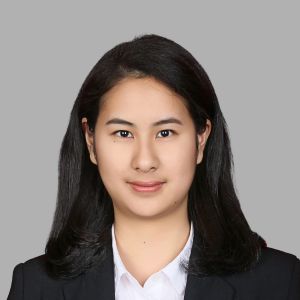
Raissa Pramudi is an MBA candidate at the Samuel Curtis Johnson Graduate School of Management at Cornell, focusing on strategy and finance. Before the Johnson School, she spent about six years as a Management Consultant at Accenture, primarily across Southeast Asia, advising clients mostly in the energy and utilities sectors. At Cornell, she is involved with the Sustainable Global Enterprise Club, the Energy Club and the Environmental Finance and Impact Investing Fellowship. This past summer, she worked as a Business Strategy MBA Intern at Amperesand, a solid-state transformer startup, where she built the market and financial models supporting the company’s commercial and fundraising strategy.
Article Information
- Categories
-
- Blog Posts
- Schools & Departments
-
- Johnson School
-
- Cornell MBA