The last mile is human: Why frugal technology drives adoption in emerging markets
Why frugal health technology wins where costly innovation stalls: the 2026 Cornell EMC² pitch winner on lessons in adoption from India’s villages.
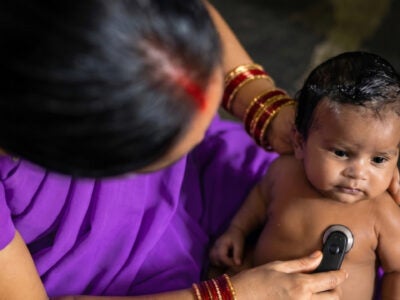
A community health worker uses JivaScope to listen to an infant’s heart and lungs. Image credit: JivaScope
By Tunir Sahoo
When my neighbour Arabh was a newborn, he developed pneumonia and ended up in hospital. He reached care in time. Many children in rural India do not. In 2018 alone, pneumonia killed about 127,000 Indian children under the age of five, according to UNICEF. Many of those deaths begin with a sound: a crackle in the lungs that nobody nearby was trained to hear.
That gap is why I started JivaScope after fieldwork at a rural clinic in Bihar. In November, the idea reached Cornell Tech in New York City, where JivaScope won the $30,000 first prize from 104 submissions at the Cornell EMC² Mark Mobius Pitch Competition, organized by the Cañizares Center for Emerging Markets.
The field revealed a harder question. Digital stethoscopes are already sold around the world, yet in the rural health centres we visited, we rarely saw one in use. If invention is not the bottleneck, what is? My answer, after years in the field, is that the last mile is human.
Adoption starts with the health worker, not the algorithm
India has more than one million Accredited Social Health Activists: community health workers, each a woman chosen by her own village, serving roughly one worker for every 1,000 people. They already visit every home. What they cannot do is listen to a heart or a pair of lungs and know what they heard.
The specialists who can are scarce. Rural community health centres have 4,413 specialists against 21,964 needed, a shortfall of 79.9 percent. More than 200,000 Indian children are also born with congenital heart disease a year, and about one in five needs treatment in infancy.
My team held structured conversations, built on 122 set questions, with 150 health workers, nurses and doctors across 29 sessions in one rural block of Maharashtra, then interviewed staff in four states. We began believing our hardest problem was accuracy. We came away understanding it was fit. Four requirements came up again and again:
- Work without internet: Village signal is patchy, so our app is built to work offline.
- Speak their language: The app runs in 23 Indian languages, because a tool in English is a tool left in a drawer.
- Give one clear answer: A list of possible conditions creates anxiety. “Refer” or “normal” creates action.
- Fit a public budget: District budgets cap what a single device can cost. A device that procurement cannot buy never reaches a village.
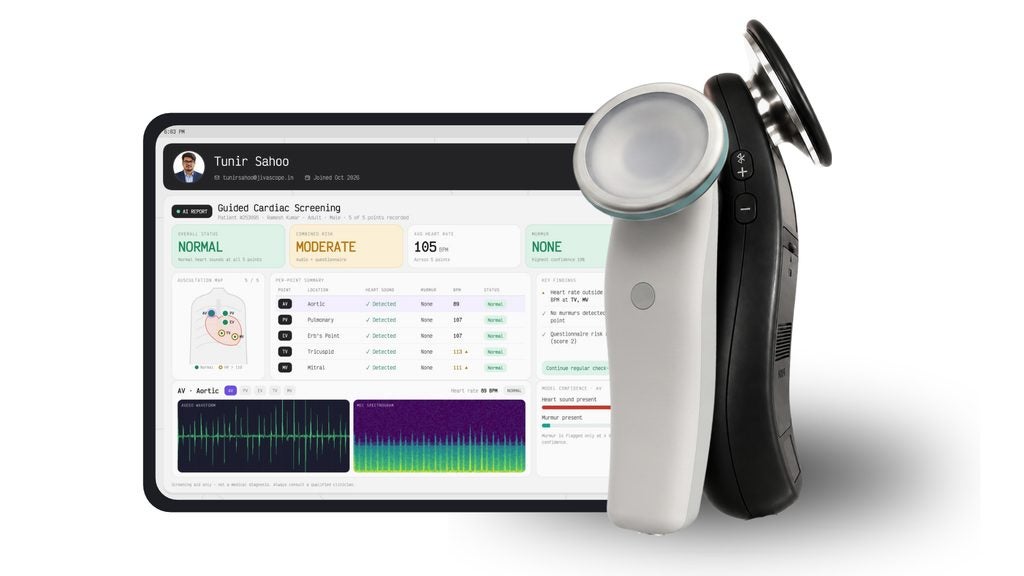
So we built JivaScope around those answers: a pocket-sized digital stethoscope that pairs with an ordinary Android phone and uses artificial intelligence to give one answer, refer or normal. It screens rather than diagnoses. To me, that is what frugal technology means: not cheap, but designed around the constraints of the people who use it. A recent Cornell conversation on artificial intelligence in emerging-market health care reached the same conclusion: tools must work offline and run on low-cost devices.
The buyer, the user and the patient are three different people
The hardest question, I now believe, is not technical. In public health, the government buys the device, the health worker uses it and the patient benefits. A district officer needs a price that fits a capped budget. A health worker needs a tool that saves time rather than adding to it. A family needs a referral that leads somewhere. When those interests pull apart, even a good product stalls. Frugal design helps because it serves all three at once: a lower price for the buyer, fewer steps for the user and a faster referral for the patient.
This is a question for founders and researchers alike, and one I intend to keep studying, in villages with my team and, I hope, in classrooms like Cornell’s.
What Cornell sharpened
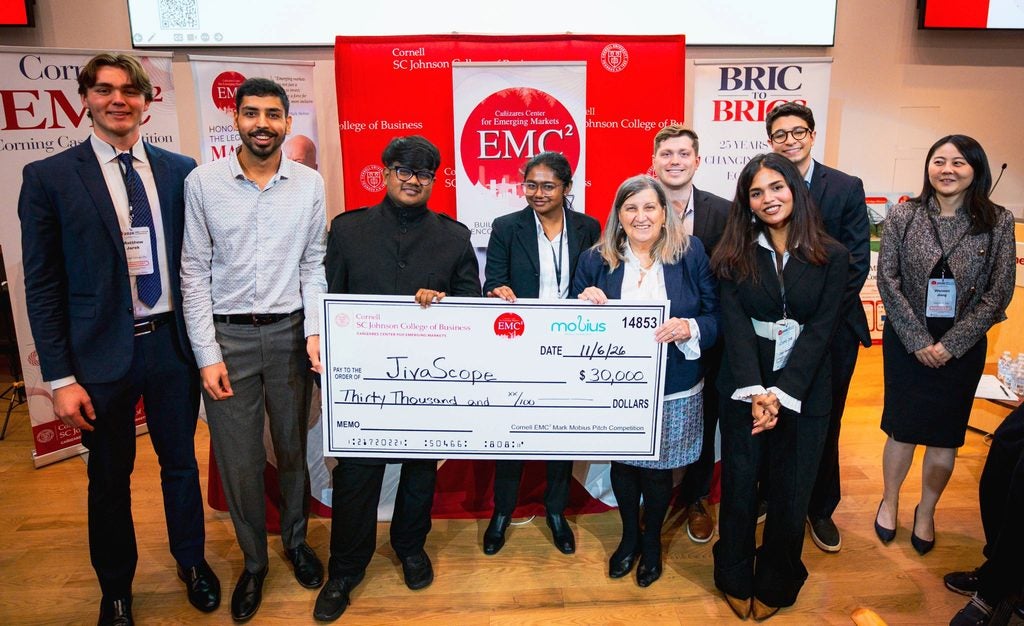
Mary Cha gave us direction on our very first pitch deck, and coaching sessions with Vladimir pushed me to explain our work to people who have never stepped inside a rural health centre.
Standing alongside founders from other emerging markets, I noticed that our problems rhyme: too few specialists, patchy internet and tight public budgets. Frugal solutions built for one emerging market can travel to the next.
What comes next
Our field pilots have screened more than 2,100 patients, including over 1,200 children. Next, we are pursuing regulatory approval in India and expanding pilots with hospital and government partners. If you work in public health or emerging-market research, I would love to hear from you through jivascope.com.
I am grateful to the Cañizares Center for Emerging Markets, the EMC² team and Mark Mobius for giving founders from emerging markets a stage. Every child deserves someone nearby who can listen. Our job is to make sure that person is the health worker already at the door.
About the author

Tunir Sahoo is the founder and CEO of JivaScope, a medical technology startup in Kharagpur, West Bengal, that builds an artificial intelligence-powered digital stethoscope for frontline health workers in rural India. He holds a Bachelor of Pharmacy from Dr. B.C. Roy College, Durgapur, and an MBA from the Indian Institute of Management Kashipur, where JivaScope is incubated. JivaScope won first place at the 2026 Cornell EMC² Mark Mobius Pitch Competition. Tunir is deeply focused on entrepreneurship, frugal innovation and public health systems in emerging markets and he plans to pursue these interests through formal research as well as hands-on practice.
In this article
Article Information
- Categories
-
- Blog Posts