What I learned building PowerForward for Indonesia’s just energy transition
I arrived at Cornell’s Samuel Curtis Johnson Graduate School of Management with nearly a decade of sustainability and consulting experience. Yet, one question kept pulling me back to Indonesia: Why does a country with abundant renewable resources still struggle to make clean energy accessible to everyday communities?
Before my MBA, I worked and volunteered across various communities in Indonesia where I noticed a significant difference in accessibility to basic infrastructure and environmental solutions between communities. Despite having available technology, people struggled to make meaningful use out of it to create impactful solutions. Inspired to address this accessibility gap, I developed PowerForward, an early climate venture, during my MBA to address a relatively simple hypothesis: What if communities could share renewable energy infrastructure instead?
This summer, I returned to Indonesia to test whether my idea will work in practice. With support from the Center for Sustainable Global Enterprise’s Social Impact Internship Fund (SIIF) and the Johnson Summer Startup Accelerator, I worked full-time on PowerForward, leading a multidisciplinary team spanning field research, finance, marketing, policy and technical research across Jakarta, Lombok and Bali.
Jakarta showed me energy as community infrastructure
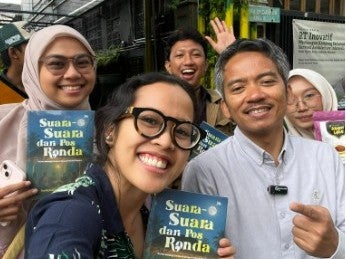
At RT 08/RW 04 Malaka Jaya in East Jakarta, a local organization known for its local initiatives in building sustainable impacts, I met with Dr. Taufiq Supriadi who leads the community to connect energy, water, food, waste management, greening and community empowerment. He showed me how the solar panels installed on a neighborhood home do more than just help the homeowner. They also provide electricity supporting pumps for clean water, fish cultivation and organic material processing for the community.
I began to question the possibility of renewable energy being more than an individual asset but also an infrastructure enabling several community services at once. The dense neighborhoods have limited roof space, shading and different ownership arrangements. The social infrastructure of Malaka Jaya suggests that collective action already exists in some Indonesian communities.
A mosque in Lombok showed the economics of sharing
My field research in Sembalun, Lombok, gave me another perspective. There, solar was already serving community infrastructure rather than individual households. A mosque previously paid around Rp450,000 (~USD25) per month for the utility electricity. After installing solar, its average electricity expense fell to approximately Rp150,000 (~USD8) per month.
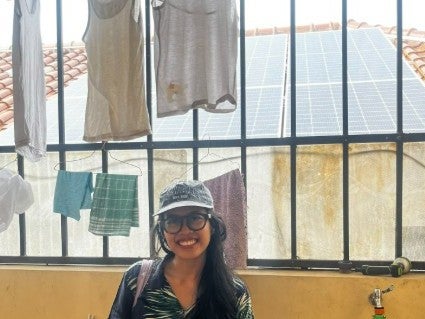
The solar energy system supports the mosque, school, water pump and meeting room. Battery storage also allows these facilities to continue operating during main grid outages for one to two days. This was one of the clearest demonstrations that shared renewable infrastructure could create tangible community value.
The original solar system came from a non-profit organization grant. Additional batteries were later provided through donation programs, religious institutions, and university students. The community did not fund the original capital expenditure.
But residents had already pooled money to contribute to cover mosque electricity expenses and previously contributed toward shared infrastructures such as school facilities. Additionally, my interviews with the community suggested that residents are willing to support future solar expansion now that they have seen the benefits firsthand.
Perhaps asking households to finance unfamiliar infrastructure from day one creates too much friction. A different pathway might begin with grants, institutions or blended financing as in the mosque’s case. Lombok also exposed problems that money alone will not solve: the limited understanding of solar technology, a dependence on the few people with electrical knowledge, maintenance concerns, and reduced generation during prolonged cloudy weather.
Bali reinforced that economics drives adoption
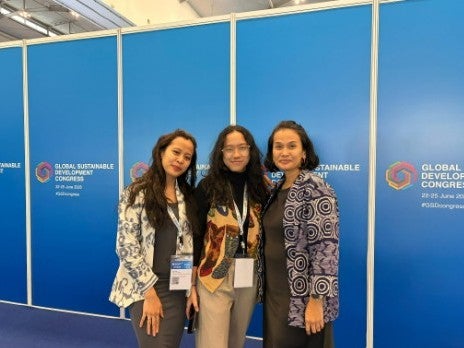
My research in Bali reinforced another pattern. Solar has a clear environmental proposition, but households and businesses evaluate the investment through cost, payback, reliability and financing. People do not buy an “energy transition.” They respond to outcomes from direct experience: lower electricity bills, reliable electricity and protection from outages.
This forced me to reconsider PowerForward’s first customer because low-consumption households often struggle to justify major solar and battery investments. Instead, high-demand users such as a community facility, apartment, school or larger institutions might be a better customer to approach first.
Customer demand was only one side of our research. Even if communities wanted to share renewable energy, would Indonesia’s electricity system allow them to? We examined three questions:
- Who owns the distribution infrastructure?
- Can neighborhood microgrids operate in Indonesia?
- Can electricity legally move between households or meter
Policy research: Is my idea was even possible?
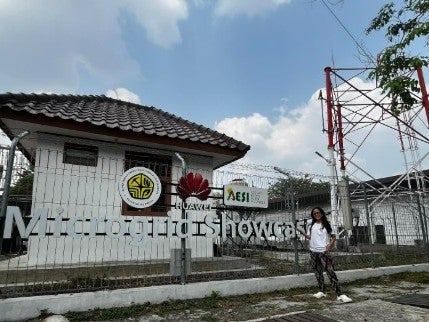
My early concept for PowerForward envisioned neighbors financing and potentially sharing renewable electricity. However, electricity cannot simply move between homes because a startup creates software to coordinate the transaction. Physical infrastructure has an owner, and electricity distribution is regulated, meaning multiple meters create legal and technical boundaries that make direct peer-to-peer sale of excess electricity outside the established utility framework face significant restrictions.
PowerForward’s Policy Founding Intern Noah Bolger, a Cornell Atmospheric Science undergrad, helped distinguish between attractive customer proposition and legally feasible energy architecture. The Indonesian utility company owns and operates most electricity distribution infrastructure in Indonesia. Its role is supported by Indonesia’s regulatory structure and state’s constitutional responsibility over vital utilities.
PowerForward could not simply become an “AirBnB for electricity” connecting one household’s excess solar with another household. The policy research pushed us toward models operating within clearer boundaries, such as shared infrastructure behind a common connection, community facilities, localized microgrids where permitted or partnerships with utilities.
However, our research also showed that this constraint does not make community energy impossible. We found examples of different approaches internationally to successful energy sharing in other nations, showcasing that community energy is feasible. For Indonesia, that raises a more useful question than whether we can bypass the existing grid: What model of community energy sharing could work with PLN rather than around it?
What just energy transition means now
I began exploring alternatives: shared solar for community assets, solar-as-a-service, community battery systems, EV charging hubs and localized microgrids. Further development might eventually include monitoring energy flows, coordinate assets or optimize batteries. But first, there must be a viable energy system worth coordinating.
Previously, I thought about energy access mainly through technology and financing. However, Indonesia taught me to think in systems. A just energy transition requires financing, maintenance, viable economics, enabling regulation, community trust, local technical capacity and real user value.
PowerForward’s next step is to move from broad research toward a real-world experiment. We are exploring a pilot with one or two communities in Kupang (off-grid remote areas) and/or Jakarta (on-grid urban areas), Indonesia, where we can test how distributed solar, storage and community energy management work under actual operating conditions. During my final year at Cornell, I want to use this pilot to test the questions our summer research surfaced: Do the economics work? What does regulation permit? Who should own and operate the system? And does software create enough additional value to support a scalable model? The answers will determine whether PowerForward becomes the venture I pursue after graduation or leads me toward a different climate venture.
The Social Impact Internship Fund gave me the financial space to choose this uncertain but rewarding work over a traditional internship. While PowerForward is still evolving, the direction is clearer. We want to build practical models that make clean, reliable energy accessible to communities left out by individual ownership systems.
About the author
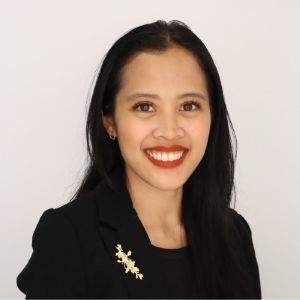
Tika Diagnestya is an MBA candidate at Cornell University’s Samuel Curtis Johnson Graduate School of Management and founder of PowerForward. Her background spans strategic consulting at Accenture, BCG and McKinsey.org where she focuses specializes in cost optimization and environmental impact. Additionally, she has experience in project management and partnerships regarding air quality and circular economy initiatives across start-up and non-profit organizations. Through the Johnson Summer Startup Accelerator and the Social Impact Internship Fund, she led a multidisciplinary team conducting customer discovery, policy analysis, financial research and field research across Indonesia. Her work focuses on shared renewable energy, community financing and digital tools to expand clean energy access in emerging markets.
In this article
Article Information
- Categories
-
- Blog Posts
- Schools & Departments
-
- Johnson School
-
- Cornell MBA