Dyson School history
As a land-grant institution, Cornell University has influenced not only the agricultural industry across New York state, but also the livelihoods of state residents. Faculty members and friends of the Charles H. Dyson School of Applied Economics and Management have contributed their knowledge, experience, funding and time to make the school what it is today.
Celebrating our agricultural roots
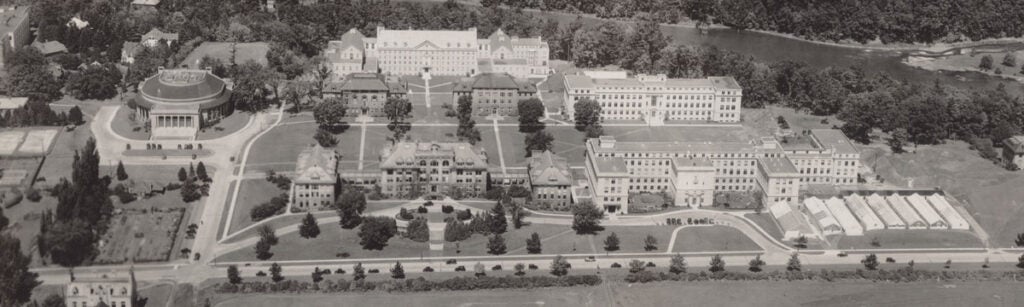
To understand the Dyson School’s history, we have to start a little earlier. Founded in 1865 as a land‑grant institution, Cornell University has offered agricultural programs from the very beginning. The Hatch Act of 1887 further strengthened this mission by establishing agricultural research farms nationwide. Just one year later, Cornell’s Department of Agriculture merged with several science departments, including botany, entomology, and veterinary medicine, to form the College of Agriculture. This became the first home of what would eventually become the Dyson School. From the start, this interdisciplinary approach laid the foundation for collaboration across Cornell’s departments, schools, and colleges — a hallmark of the Dyson School today.
The Dyson School through the decades
The Dyson School has a rich, storied history — one that has shaped industries, advanced scholarship, and influenced lives across New York state and beyond. Named in honor of an entrepreneur, public servant, and philanthropist, the school reflects a legacy of impact that continues to guide its mission today.
Originally centered on agriculture, the academic unit evolved alongside the industries it served. As agricultural economics and farm management emerged as distinct fields, business‑focused academic offerings expanded within the College of Agriculture and Life Sciences (CALS). The original Department of Farm Management underwent several name changes to reflect these shifts in scholarship and industry needs.
2001 — New name: Department of Applied Economics and Management
2010 — Charles H. Dyson School forms within CALS
2016 — Dyson becomes a shared school between CALS and the newly formed college of business
Becoming a school and broadening our focus
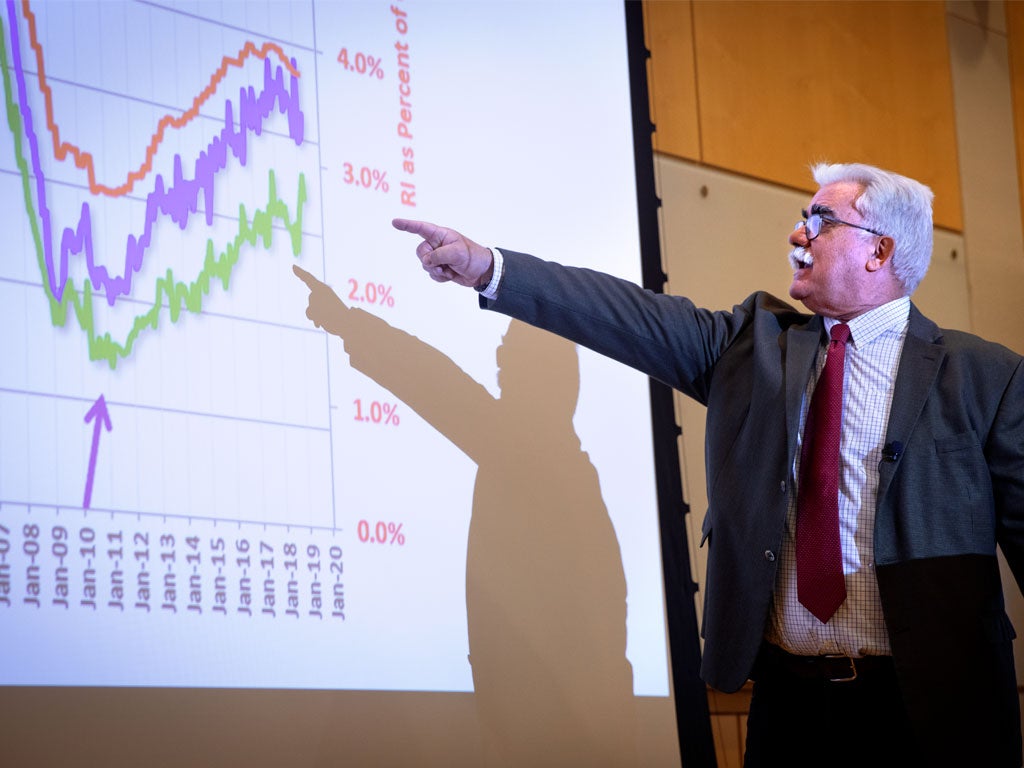
What was once an agriculture-centered program broadened in focus, eventually becoming a school of its own.
Today, this unique arrangement between two colleges gives Dyson School students an incredible range of interdisciplinary and experiential learning opportunities.
In 2010, the Department of Applied Economics and Management became its own school, named for Charles H. Dyson, whose family had established a $25 million endowment to support applied economics management (AEM) programming. With the Dyson School’s combined focus on business and agriculture, it was a natural fit for the newly formed Cornell College of Business in 2016.
About our school namesake, Charles H. Dyson
As agricultural economics and farm management emerged into fields of their own right, business offerings grew in the Cornell College of Agriculture and Life Sciences (CALS). This led to a new name — the Department of Applied Economics and Management — that would better reflect the evolving landscape and accommodate future growth.
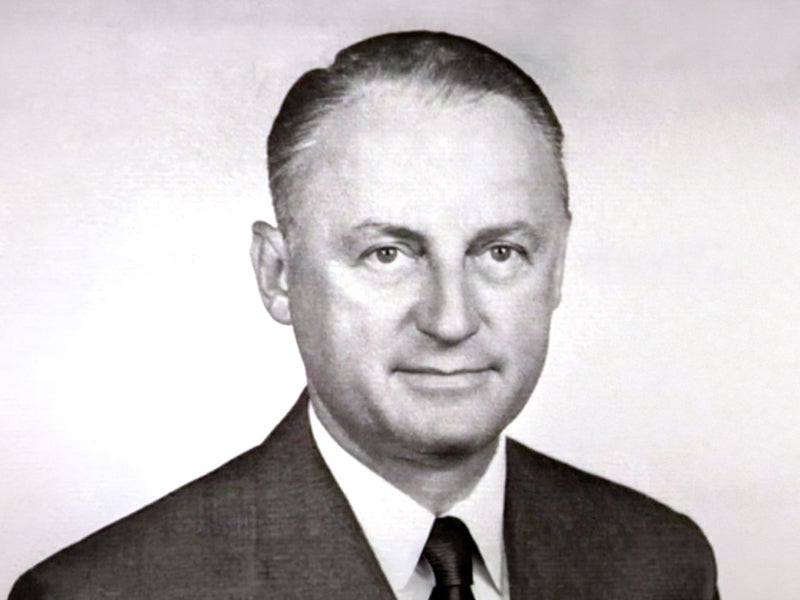
Charles H. Dyson (1909–1997) was an entrepreneur, government advisor, and philanthropist who pioneered leveraged buyouts and founded the Dyson-Kissner-Moran Corp. The Dyson Foundation continues his legacy by supporting nonprofits across New York’s Hudson Valley.
He took an unconventional path to education, attending night classes at what is now Pace University while working during the Great Depression. After starting at Price, Waterhouse & Co., he served in World War II as a special consultant to the Secretary of War and a colonel in the U.S. Army Air Corps, earning the Army Distinguished Service Medal and recognition from the British Empire.
In 1954, he pioneered an early leveraged buyout, building a global firm with longtime partners. A committed philanthropist, Dyson made a lasting impact at Pace and across the Hudson Valley. His family’s legacy at Cornell University continues through generations of alumni and a 2010 gift that established the Dyson School within Cornell’s College of Business.
Cornell’s influence on agricultural economics and farm management
The influence early faculty members, and Cornell as a whole, had on the agricultural industry is captured in two books, both authored by Professor Emeritus Bernard F. “Bud” Stanton.
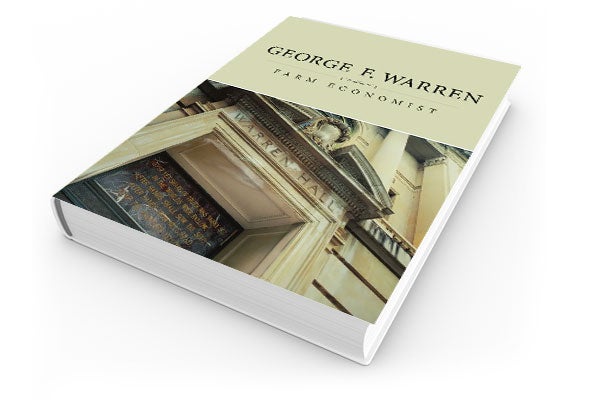
An Influential Leader: George F. Warren
The biography George F. Warren: Farm Economist tells the story of the farm management pioneer, international leader, and namesake of Cornell’s Warren Hall.
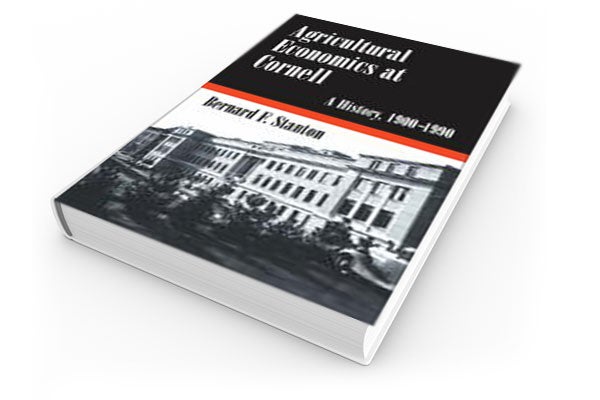
An Industry Reflection: Agricultural Economics
The book Agricultural Economics at Cornell: A History, 1900-1990 covers, decade by decade, nearly a century of contributions made to research, education, and extension.
There’s more to the Dyson School story
Now that you’ve read about our history, we invite you to learn more about our current programs, impact and outreach.