Grand Challenges Program
Addressing real-world dilemmas, pressing global issues and inequities
At the Charles H. Dyson School of Applied Economics and Management, we believe in doing business for the greater good. This ethos is epitomized by the immersive Grand Challenges Program. There is nothing quite like it anywhere else — and it’s one more reason Dyson graduates often stand out from their peers.
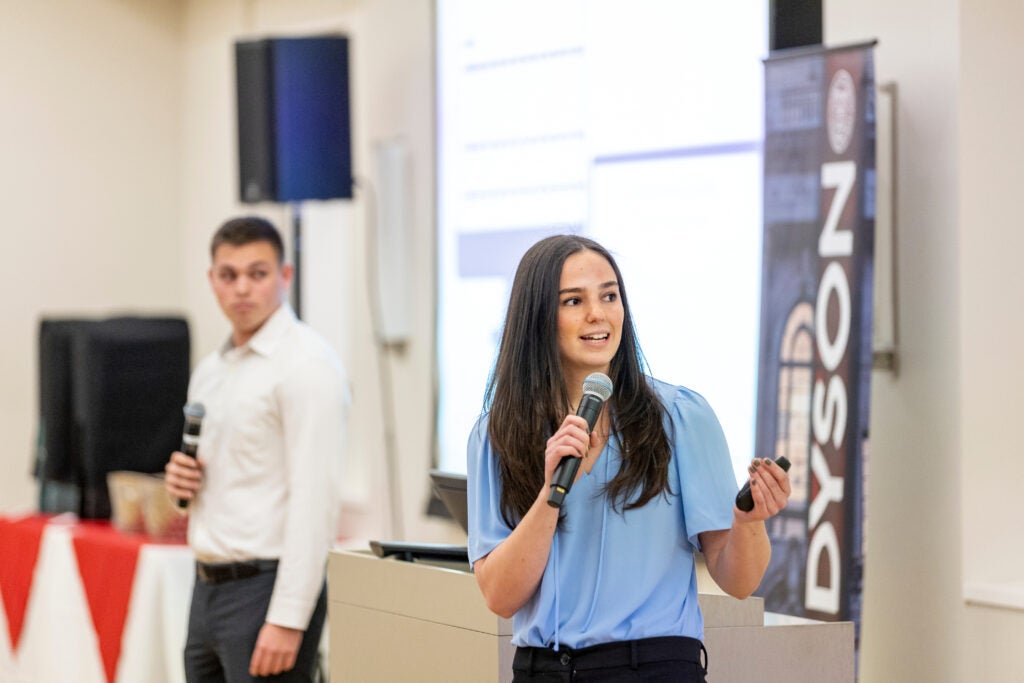
Community-engaged and globally aware
The Grand Challenges Program is a hallmark of the Dyson academic experience. This multi-year program is embedded in the undergraduate curriculum. The program involves a sequence of courses — each building a foundation for the next — and culminates in a team-based capstone project centered on a pressing societal issue. Aligned with the priorities of the United Nations Sustainable Development Goals, Grand Challenges coursework addresses topics such as hunger, climate action, sustainability, and equity.
Develop smart and sharp skills through applied learning
Through Grand Challenges, Dyson students develop a robust set of “sharp skills” (e.g., statistical thinking and data analytics) and “smart skills” (e.g., communications and leadership) that make them uniquely qualified to tackle pressing challenges. The knowledge, innovation, and entrepreneurial spirit fostered in Dyson turn ideas into actions that will impact the world for good.
Students seek course and project options aligned with their passions. Coursework is human-centered and compels students to think critically about “stakeholders beyond shareholders.” Courses build on each other and must be taken in sequence.
- In the first year, students are introduced to the United Nations Sustainable Development Goals while emphasizing critical reflection.
- Next is a pre-project skills course focusing on the human dimensions of team performance and business success.
- The final project course is a client-facing project, with teams working under the close supervision of a faculty member and an MBA coach on a real-world problem at the local, regional, national, or global level.
Benefits of the Grand Challenges Program
The Grand Challenges Program gives Dyson students an unparalleled real-world, engaged-learning experience and a chance to make a meaningful difference in communities near and far. Grand Challenges projects may impact communities locally, regionally, domestically, and abroad. Through the Grand Challenges Program, students may collaborate with non-government organizations (NGOs), non-profits, large and small companies, and startups with innovative and novel approaches to global challenges.
No matter what career path you choose, your Grand Challenges experience will help you succeed by becoming a socially responsible leader who uses business knowledge to address society’s most pressing challenges.
Critical skills
Develop critical skills in communication, self-awareness, teamwork, cultural humility, project management, customer discover and leadership for societal impact.
Career connections
Prepare to engage with small businesses and high-profile companies on human-centered projects that are aligned with the United Nations Sustainable Development Goals.
Community engagement
Become more active in your community and build connections for future engagement. In the Grand Challenges Program, students find a culture of support at Cornell and beyond.
Cornell Business News
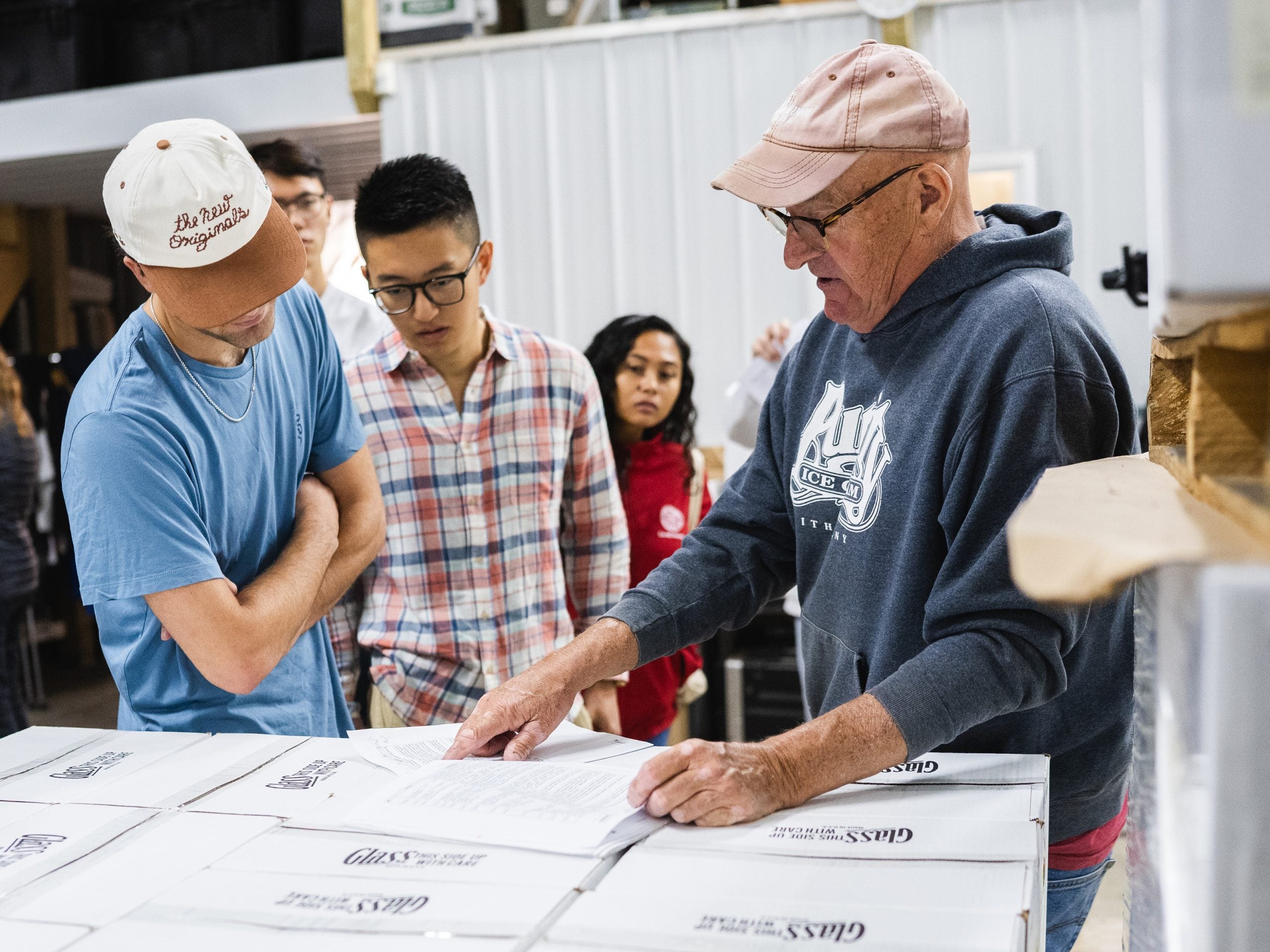
Students design a reusable bottle system for local wineries
The proposed pilot program aims to cut operating costs and carbon dioxide emissions for Finger Lakes wineries.
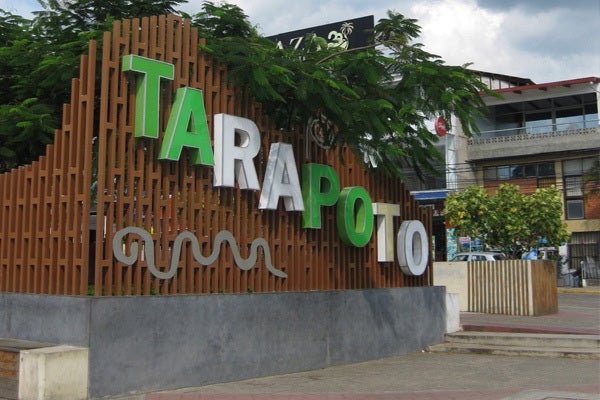
Students help rural Peruvians grow turmeric business
Dyson School students traveled to a rural region of Peru to brainstorm sustainable business ideas for a local community.

Dyson students do business for the greater good
Student teams tackled problems ranging from growing sustainable crops in the Amazon to subsidizing music lessons in Ithaca during the Grand Challenges Impact Competition.
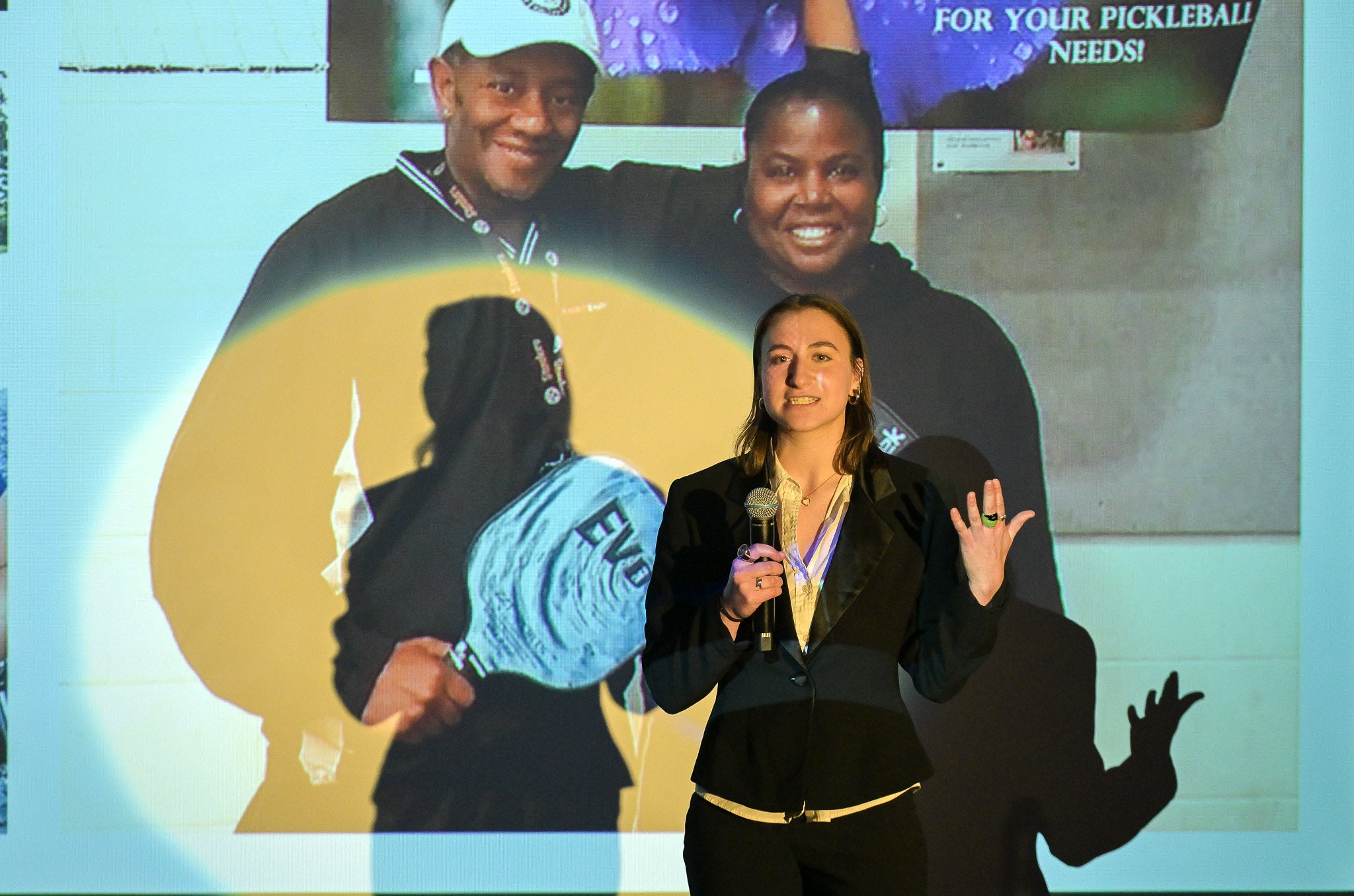
Team Pickleball Mania wins pitch competition
Top honors went to the students working with the alumna-owned Pickleball Mania, offering space in the Ithaca Mall to play the fastest growing racket sport in America.
The UN Sustainable Development Goals
Dyson’s connection to the world
Inspired by the world’s largest global sustainability initiative — the United Nations Global Compact — the Dyson Grand Challenges Program connects its curriculum to real-world challenges. Adopted by 193 countries in 2015, the UN Sustainable Development Goals (SDGs) are part of a shared vision to end extreme poverty, reduce inequality, and protect the planet by 2030. The plan encompasses 17 goals, which cover issues from health and hunger to gender equality and energy — and our faculty has developed courses and projects directly related to many of them.
The Grand Challenges Program team
-
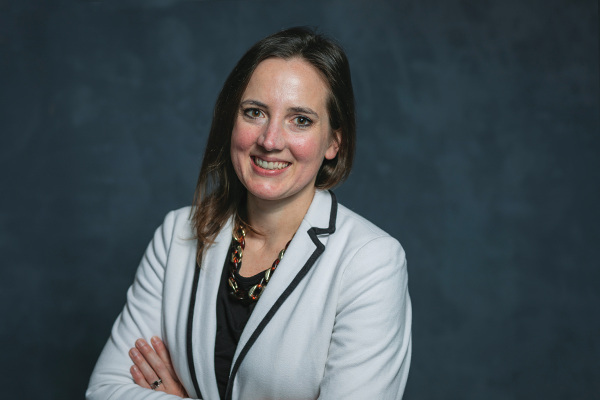
Sarah Wolfolds
Associate Teaching Professor; Academic Director of the Grand Challenges Program; Director of Undergraduate Studies for the Dyson School -
Lisa Gerber
Grand Challenges Program Manager -
Ginny McCollom
Grand Challenges Program Assistant