
A champion for global education equity: Lydiah Kemunto Bosire, 20 for 20 honoree

Lydiah Kemunto Bosire, CEO of 8B Education Investments
As the founder and CEO of 8B Education Investments, Lydiah Kemunto Bosire ’01 MPA ’02 has emerged as a transformative figure at the intersection of sustainability, global education and human development. She is addressing the $50 billion financing gap faced by African students pursuing higher education at global universities, advancing a model that links education access to broader efforts in sustainability and innovation. With a background in international diplomacy through her work with the United Nations, the World Bank and the World Health Organization, Bosire brings a diverse set of experience to her mission of equipping Africa’s rising generation to lead solutions in climate, health and other critical sectors.
Bosire, who holds a doctorate in politics from the University of Oxford New College, is one of the 20 for 20 Notable Alumni honored this year in celebration of the 20th anniversary of the Center for Sustainable Global Enterprise at the Cornell SC Johnson College of Business.
Focused on innovative educational financing as a tool for changing the face of the global labor market, Bosire says her commitment stems from her belief in equity and the transformative power of education in leveling out the playing field. “Being selected for the Notable Alumni list is an immense honor and testament to the collective efforts and vision behind 8B Education Investments,” she says. “We believe that African youth can and must be equipped to drive global innovation, productivity and ultimately shared prosperity. And the only way to do this at meaningful scale is at the intersection of business and impact. We are demonstrating that African global education is investable by private capital and can take off, much as it has done in other regions of the world. Ours is a practical approach to turn Africa’s demographic advantage into a real asset.”
Learn more about Bosire in this Q&A.
A commitment rooted in equity and the power of education
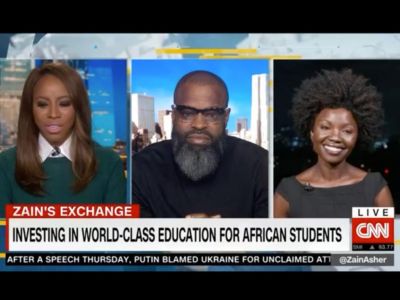
Q. What drives your commitment and focus in environmental and/or social impact?
Bosire: While my career in social impact, including roles at the UN and the World Bank, has been deeply rewarding, my commitment is rooted in a profound belief in equity and the transformative power of education. Growing up in a small village in Kenya, I witnessed firsthand how unequal access to global education suppresses potential and reinforces systemic disparities, particularly between Africa and the rest of world. Today, by focusing on innovative education financing as a strategic lever to unlock capital markets and reshape the global labor landscape, our work contributes to leveling the playing field and ensuring that African brilliance has the opportunity to thrive on the world stage. While not sufficient, this is a necessary pathway to ensure that Africa can keep showing up in all the rooms where the future is being built. Moreover, in a world where global talent is the source of the much-celebrated remittances, scale grows this source of capital for Africa’s growth.
Q. Describe a project or initiative related to sustainability that you are particularly proud of and how it has influenced your role, company, industry or community.
Bosire: I am most proud of launching 8B Education Investments, the first platform dedicated to financing African students pursuing STEM-related degrees at universities globally, starting with the U.S. Not only is this initiative influencing the education finance space, but it also is showcasing the great potential of African talent. I would like to see Africa punch at its demographic weight, and there is no way for this to happen without bridging the financing gap between students and their households on the one hand and global education institutions on the other. Our approach has created a template that can be built upon to scale the participation of banks and commercial capital in global education, skilling and mobility, creating pathways that can be followed by future generations of African ecosystem builders and leaders. The success of this initiative has expanded the conversation on inclusive education finance and demonstrated the importance of investing in human capital from growth markets. In the future, the question will not be whether we can finance mutually beneficial global education mobility from Africa to the OECD at scale, but rather how it can be variously designed to meet different goals in a world of trade-offs.
Challenges, trends and advice: Reflections on a career in sustainable impact
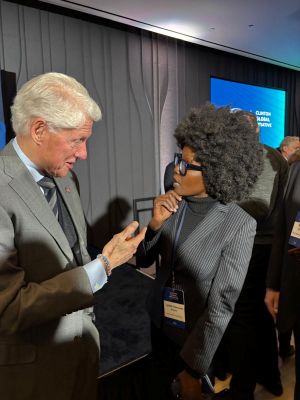
Q. Describe the biggest challenge you encountered as you built your career in sustainability and how you overcame it.
Bosire: Before 8b, the main challenge was in acutely feeling the underrepresentation of the African lived experience in many of the rooms I had the fortune of being in. I decided to leave the multi-lateral world to build 8b as a tool that would ensure greater African participation in global decision-making by growing African talent in the universities and networks from which global decision-making rooms hire. At 8b, the challenges are different — raising capital in a difficult, high interest-rate environment. Facing the headwinds of the populist, anti-migration zeitgeist across the OECD. Navigating partnerships in a rapidly shifting regulatory space. Retiring once-sacrosanct talking points about the importance of global education in strengthening soft power. And from time to time, managing the ethical dissonance of lenders, borrowers, investors and other stakeholders. The way to overcome these challenges is to remind myself that if this was easy, it would already have been done. I also remind myself that we are not building for the annual report, but for the 50- to 100-year agenda of changing Africa’s place in the knowledge economy.
Q. Envision the future of sustainability in your industry. What trend excites you and gives you hope for the future?
Bosire: Two trends. First, more institutions are recognizing the critical role that education plays in addressing global challenges such as climate change, global health and technological advancement. Put differently, solutions for challenges flow from human brilliance. The world is better off when we maximize the range of human brilliance in our solutions-seeking systems. Conversely, closing African brilliance out of innovation ecosystems impoverishes us all.
Second, for too long, education investment has focused on access of basic education. But we also need to invest in education as a tool for accessing the global labor market. The rise of impact investing and its growing willingness to invest in education finance — and therefore access to the top of the human capital pyramid — is exciting, not least because therein lie the seeds of actually changing who holds power over time. In 50 years, this shift could result in African engineers and innovators becoming as prevalent at the forefront of global technological and economic leadership as Indian engineers are today. 8b is putting in place building blocks for this future.
Q. Can you share any insights or lessons learned from your experiences that may inspire current students who want to be sustainability leaders? What advice would you give them?
Bosire: Three things. First, there is often no linear journey in impact careers: What ties things together are your core values and the thing you want to change or do in the world. If someone had told me when I was getting my Ph.D. in politics that I would end up delighting in education finance, I would have laughed. And yet, finance is how I now contribute to change in the composition of the rooms in which global decision-making happens — because what drives me is how to change Africa’s place.
Second — and this is relevant for all builders from growth market builders including outside Africa — I am constantly reminded how we must build our relationships with global centers of influence and capital. And for that, there is no substitute to showing up. This understanding will enable you take that next flight to that next conference when you’d rather hold meetings over Zoom.
And finally, remember that complex challenges cannot be solved by a silver bullet; they require multifaceted solutions. And never fail to listen to the singular wisdom that comes from lived experiences.
Lessons from Cornell and the role of business schools
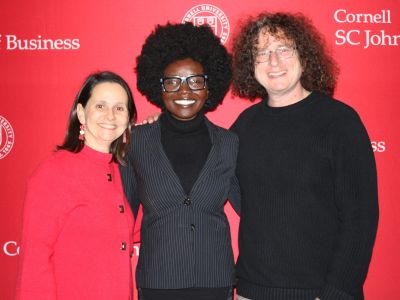
Q. What are the most valuable things you learned at Cornell that have helped you in your career? Did any Cornell faculty member(s) influence you on your chosen career path? Who and why?
Bosire: Cornell’s rigorous interdisciplinary approach taught me to think critically across sectors. It nurtured my passions, provided grants that allowed me to explore a wide range of ideas and made me believe that the only limit to what I could create was my imagination. The activism and advocacy work I began at Cornell opened countless doors and fundamentally changed my view of what was possible. Most importantly, Cornell taught me that I had a voice — a voice to advance inclusion and to remind systems that there should be “nothing about us without us.” That lesson has carried through my career, including my work in financing African students so they can take their place in the rooms where the future is shaped. The professors and staff whose support was game-changing are too many to name; collectively, they succeeded in creating in Cornell an environment where students like me could thrive.
Q. What role do you see business schools and universities playing in advancing sustainability initiatives, and how can alumni contribute to this effort?
Bosire: Business schools are crucial in developing the next generation of ethical leaders who understand that profitability and sustainability can coexist when businesses aligns with society with the aim of advancing shared prosperity. By teaching students to build models that create both financial returns and social impact, universities like Cornell can foster innovation that drives fields like education, clean energy and technology. Calling on Cornell’s alumni can bring to the classroom case studies that demonstrate how to think outside the box. For example, there is no reason the innovation in de-risking that has unlocked capital markets in agriculture cannot be used in education and health. Exposing students to case studies from a wider range of geographies equips them with the ability to further innovate as they move into leadership positions in various industries. Alumni are also critical for another reason: As life is too short to learn only through personal mistakes, a strong network of alumni shares insights from lived experiences through seminars and mentorship, thereby strengthening practical knowledge and professional growth.