Tech That Matters: EBT Cards Increase SNAP Participation
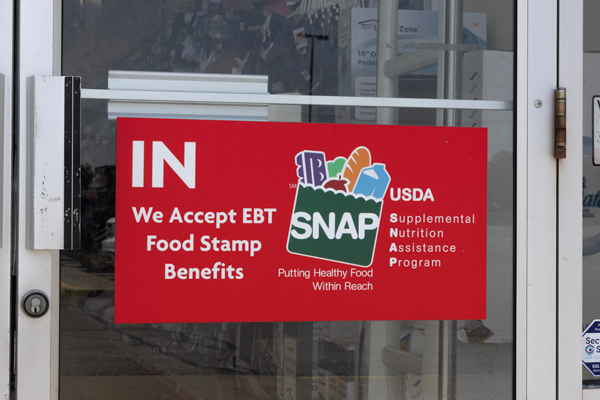
A new national study from the Cornell SC Johnson College of Business finds the transition from paper food stamps to electronic benefit transfer (EBT) cards modestly increased participation in the Supplemental Nutrition Assistance Program (SNAP), with notable effects two years after states fully rolled out the EBT program.
Miguel Gomez and Harry Kaiser, professors at the Charles H. Dyson School of Applied Economics and Management, and co-authors, found that SNAP participation rose by 1.6 percentage points after states adopted EBT systems, much less than earlier estimates of around 12%.
“The Impact of Electronic Benefit Transfer on Participation in the Supplemental Nutrition Assistance Program” published March 24, 2026, in Agricultural Economics and included an analysis of data collected over 15 years in the Panel Study of Income Dynamics (PSID), a survey of American households conducted since 1968.
Co-authors include Pei Zhou, postdoctoral associate at the Dyson School, Yuqing Zheng, professor at University of Kentucky, Lingxiao Wang, postdoctoral research associate at Texas A&M University and Diansheng Dong, economist at the U.S. Department of Agriculture, Economic Research Service.
“Our study is the first to combine monthly state-level EBT rollout information with monthly household SNAP participation data from the Panel Study of Income Dynamics,” said Gomez.
Kaiser said the longitudinal data from the PSID provided a much clearer picture of the trend. “That granularity allowed our research team to track both the immediate and longer-term effects of EBT adoption on diverse types of households.”
The shift from paper vouchers to debit-style cards did not affect all groups equally. Participation rose most among younger adults: Those under 25 were 9.5 percentage points more likely to enroll in SNAP after EBT expansion than their older counterparts. Minority households, particularly African American and Asian American/Pacific Islander households, experienced sizable gains, while white households showed no significant change.
Geography also played a role. Households in rural counties and non-metropolitan areas responded more strongly to the EBT rollout than those in urban centers. The researchers suggest that making SNAP transactions resemble typical debit card use helps reduce stigma by making transactions look more familiar, which may be especially important in smaller communities where visibility is high. EBT may also make access easier for rural families who previously faced longer travel times and more complicated paper-based redemption processes.
The transition to EBT began in the early 1980s and was completed in 2004. States implemented the system at vastly different times, creating what researchers call a “natural experiment.” The study’s analysis shows no “pre-trend,” an indicator that states adopting EBT weren’t already experiencing participation shifts.
“Gains in participation did not happen immediately. Large and consistent increases emerged about 24 months after the program was rolled out statewide, which suggests the technology change required time for awareness, enrollment processes and community networks,” said Gomez. “Once the effect kicked in, it persisted and participation remained higher for years after,” said Kaiser.
When the federal government began replacing paper vouchers with electronic cards, policymakers hoped the change would reduce fraud, modernize the system and reduce stigma, long cited as a major barrier to SNAP participation among eligible households.
Paper vouchers were noticeable. EBT cards look like any other debit card and they let recipients check balances easily, shop more often without losing leftover benefits and complete transactions more quickly. For retailers, electronic transactions reduce processing costs and speed checkout lines.
The researchers also noted potential downsides to the EBT system. Older adults and those unfamiliar with electronic payment sometimes struggled with the transition, and small stores lacked the infrastructure to process EBT, which limited access in some areas. Evidence from this study supports those concerns: older adults saw little to no participation increase after EBT’s introduction.
While SNAP EBT is now ubiquitous, the findings are highly relevant as states expand electronic systems in related programs such as the Special Supplemental Nutrition Program for Women, Infants, and Children (WIC), and e-benefits, implemented nationwide in 2022.
“Digital transitions may widen gaps if groups less comfortable with technology do not receive targeted outreach,” said Kaiser. “While EBT modernized SNAP’s delivery and encouraged more families to enroll, the effects are not uniform across all groups and policymakers designing new or expanded electronic systems should anticipate similar disparities and plan accordingly,” said Gomez.